
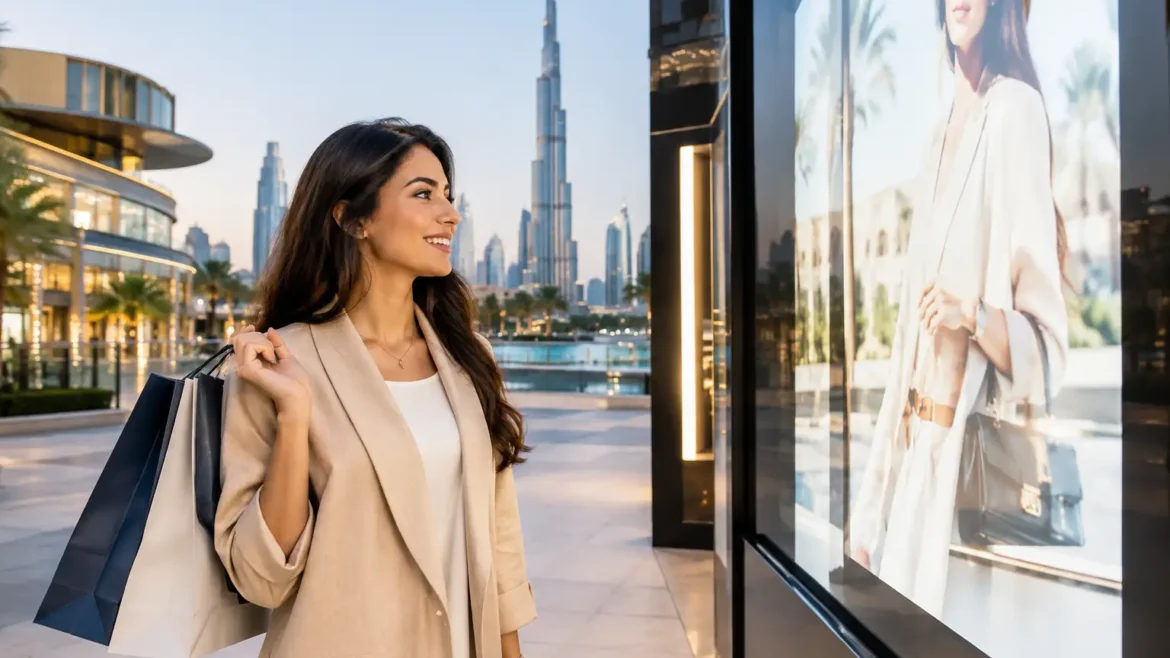
A retail launch has a short window to make its case. Before a customer understands the product, they notice the storefront, the display lighting, the materials, and whether the space feels ready for business. Dubai retail launch installations need to do more than look impressive in a presentation. They must be built for high-footfall locations, approved by the venue, installed safely, and ready for the first customer at opening time.
For retailers, brand managers, and project teams, the strongest launch environments come from treating design, fabrication, logistics, and installation as one connected delivery process. A good concept matters. A concept that can be manufactured, transported, assembled, and maintained in a live commercial setting matters more.
Start With the Commercial Job of the Space
A launch installation should be designed around what the brand needs visitors to do. That may be entering a new store, stopping at a kiosk, testing a product, sharing content, speaking with staff, or making an immediate purchase. These are different commercial objectives, and they require different layouts.
A beauty brand introducing a limited collection may need a strong hero wall, product trial stations, mirrors, and controlled lighting. A technology retailer may need secure demo counters, concealed power management, and clear staff circulation. A food or beverage activation needs practical service access, storage, hygiene-conscious finishes, and queues that do not block neighboring tenants.
The most visually ambitious installation is not always the best one. In a mall corridor, an oversized structure can reduce sightlines or create congestion. In a compact retail unit, too many display features can make merchandise difficult to browse. The right approach depends on the site, the audience, the launch campaign, and the expected dwell time.
Plan Dubai Retail Launch Installations From the Site Out
The venue is not a backdrop. It is a technical condition that shapes the final build. Before finalizing a design, a project team should understand the exact footprint, ceiling height, access routes, loading restrictions, available power, floor finish, and operating hours for installation.
This is particularly relevant in Dubai’s major malls and commercial destinations, where management teams may have detailed requirements for materials, fire safety, branding visibility, working times, and handover documentation. A launch installation that looks straightforward on a render can become expensive if it requires last-minute redesigns for access, power, or venue compliance.
Conduct a Proper Site Survey
A site survey gives the fabrication and installation team information that drawings alone cannot provide. Measurements should verify actual wall positions, columns, sprinkler locations, electrical points, storefront conditions, and route widths from the loading bay to the final location.
The survey should also identify practical risks. Can large components enter the space without dismantling? Is overnight work required? Will the installation need floor protection? Are there existing fixtures that must remain accessible? These details affect the build method, crew size, delivery sequence, and final budget.
Build Around Approval Timelines
Many launch dates are fixed by marketing calendars, campaign announcements, or commercial lease commitments. That makes approvals a critical path item, not an administrative task to leave until the end.
Prepare drawings, material details, electrical plans, signage artwork, and method statements early enough for review. If the installation includes illuminated branding, suspended elements, custom counters, or temporary structures, allow time for questions and revisions. The goal is to prevent fabrication from moving ahead on assumptions that later need to be corrected.
Design for Attention Without Sacrificing Function
A launch installation should have a clear visual hierarchy. From a distance, people should recognize the brand and understand why they should approach. At closer range, they should find the product, offer, demonstration point, or staff interaction zone without confusion.
Color, lighting, texture, and scale all play a role, but they should work together rather than compete. Strong branding can be achieved through a large illuminated logo, a custom textured backdrop, a bold display frame, or a focused graphic message. It does not require covering every surface with graphics.
Materials should be selected for both appearance and use. High-gloss surfaces can create a premium look but may show fingerprints under retail lighting. Timber finishes add warmth but need the right protection in high-contact areas. Acrylic and glass can create visual lightness but require careful handling and secure fixing. For short campaigns, modular elements may offer better value because they can be adapted for future activations.
Lighting deserves early attention. It directs the eye, improves product visibility, and changes how finishes appear on camera. Poor lighting can flatten an otherwise strong display, while excessive spotlights can create glare on screens, mirrors, or glossy packaging. A good lighting plan balances the venue’s ambient lighting with targeted illumination for hero products and brand features.
Use In-House Fabrication to Protect the Schedule
Retail launches often involve multiple moving parts: joinery, metalwork, acrylic fabrication, printing, lighting, AV, branding, and on-site fit-out. When these are managed by separate suppliers without tight coordination, small delays can become opening-day problems.
An integrated fabrication approach gives the project team more control over quality, revisions, and sequencing. Designers can work directly with builders who understand material limits and installation conditions. Components can be test-fitted before delivery. Branding elements can be checked against the finished joinery instead of arriving as a separate last-minute package.
This does not mean every project needs a fully custom build. For a short pop-up or product launch, a smart combination of custom hero pieces and reusable modular structures may be more commercially sensible. The decision comes down to campaign duration, desired impact, budget, and whether the installation will travel to other locations.
Prototype Critical Details Early
The details visitors touch and photograph deserve particular attention. A reception counter with a poorly placed cable opening, a display shelf that does not fit the product packaging, or a logo box with uneven illumination can weaken the whole environment.
Where a feature is technically complex or central to the campaign, create a sample, mock-up, or workshop test before full production. This is especially useful for custom finishes, illuminated signage, interactive displays, moving elements, and high-value product showcases. Catching an issue in the workshop is far easier than solving it in a live mall after hours.
Treat Installation Night as a Planned Operation
The final installation is where every decision becomes visible. It should not be treated as a simple delivery appointment. A detailed installation plan assigns responsibilities for loading, transport, site access, component placement, electrical connections, finishing, cleaning, and handover.
The crew needs the right sequence. Large structural pieces usually go in first, followed by wall cladding, counters, display fixtures, lighting, graphics, and products. Rushing the order can lead to damaged finishes, blocked access, or rework. Packaging removal and waste collection should be included in the plan, particularly when work is taking place in a premium retail environment.
Before handover, inspect the launch space from the customer viewpoint. Check that logos are level, lighting is consistent, doors and drawers operate correctly, graphics are clean, product zones are accessible, and staff have adequate working room. Test power points, screens, interactive elements, and any illuminated components before the venue team arrives for final approval.
Measure More Than Footfall After Launch
A high-visibility retail installation should be assessed against business results, not only design feedback. Footfall matters, but it is only the beginning. Track engagement time, product interactions, staff inquiries, sampling volume, social content creation, lead capture, and sales where possible.
This feedback improves the next installation. If visitors stop but do not enter, the invitation point may need work. If staff repeatedly move displays to access stock, storage planning may be inadequate. If a photo moment performs well but product discovery is weak, the layout may need a stronger path from attention to conversion.
Creative Roots approaches these projects as buildable commercial environments, bringing design, in-house fabrication, branded displays, fit-out coordination, and on-site installation into one delivery process. When the opening date is fixed, choose a partner that can make every detail work under real site conditions, not just look good on a concept board.