
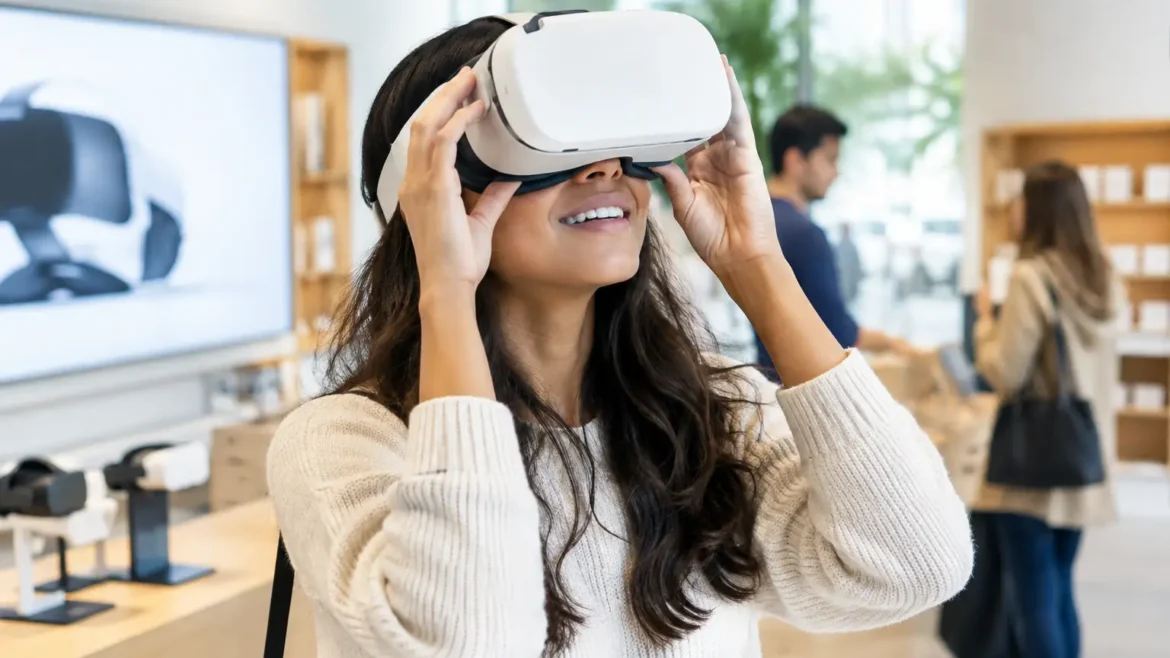
A shopper can buy almost anything from a phone in minutes. What a screen cannot provide is the feeling of stepping into a space that makes a product tangible, social, useful, or memorable. That is why experiential retail trends are changing how commercial brands plan stores, mall kiosks, pop-ups, and showroom environments.
For retailers, the objective is not simply to make a space look impressive. It is to create a reason to visit, stay longer, engage with the brand, and return. In high-traffic retail settings across Dubai and the UAE, that requires more than a photo wall or a digital screen. It requires a space built around a clear customer action.
Retail Is Becoming a Destination, Not Just a Transaction
The most effective physical retail environments now give customers something they cannot receive through an online checkout. That may be live product testing, personalized consultation, a repair or customization bar, an educational demonstration, or a small event that brings a community together.
This shift does not mean every store needs a large entertainment feature. A compact mall kiosk can be experiential when its layout lets passersby see a product being made, customized, sampled, or demonstrated in real time. A beauty counter can earn attention through guided consultations. A technology showroom can turn product features into hands-on scenarios rather than a row of static displays.
The commercial principle is straightforward: experience must support the product and the sale. If an activation is visually striking but does not explain the offer, collect qualified leads, encourage trials, or improve conversion, it is decoration rather than retail strategy.
The Experiential Retail Trends Worth Building Around
Product interaction is replacing passive display
Customers want to test before they commit, especially for products with a higher price point, unfamiliar technology, or sensory appeal. Retailers are responding with working displays, sampling stations, try-on zones, and guided demonstration counters.
The design challenge is to make interaction easy without creating clutter. Products need enough open space to be handled safely, while staff require clear positions to assist and complete a transaction. Materials, lighting, power points, storage, and circulation all need to be resolved at the build stage. A beautiful display that cannot be replenished quickly during peak hours will not perform for long.
Personalization creates a stronger reason to stay
Customization remains one of the most practical experiential retail trends because it connects a customer directly to the finished item. Engraving, monogramming, color selection, gift packaging, made-to-order options, and quick alterations turn a standard purchase into a personal one.
For a kiosk or temporary pop-up, the key is managing the operational reality. Customization equipment may need extraction, dedicated electrical loads, sound control, secure material storage, and a queueing plan. The experience should feel immediate, but the back-of-house workflow must be carefully planned to prevent delays from becoming visible to customers.
Flexible pop-ups test markets without long commitments
Retailers are using short-term physical spaces to launch products, enter new locations, build awareness, and test whether a concept deserves a permanent store. This makes pop-up retail a valuable format for both established brands and growing businesses.
A successful pop-up should not look temporary in the careless sense. Modular construction can still feel premium when the finish quality, lighting, signage, and product presentation are consistent with the brand. Reusable wall systems, adaptable joinery, and interchangeable graphics can reduce future costs, but only if they are designed from the start for repeated transport, installation, and storage.
Community programming gives people a return visit
Stores are increasingly hosting workshops, launches, expert sessions, and small gatherings. These events help a location become part of a customer’s routine rather than a place visited only when a product is needed.
This approach works best when the programming matches the category. A wellness brand can offer short consultations or demonstrations. A home brand can host styling sessions. A sports retailer can organize local training or product-testing events. Trying to force an unrelated event into a store may bring short-term traffic, but it rarely builds meaningful brand preference.
Digital tools are becoming quieter and more useful
The strongest digital retail experiences do not use technology for its own sake. They remove friction or add useful information. Digital catalogs can extend a limited floor display. Interactive screens can compare products. Appointment systems can help teams serve customers properly. QR-enabled displays can capture product interest when staff are busy.
There is a trade-off. Large screens and complex interactive features can quickly become outdated, difficult to maintain, or visually overwhelming. In many cases, good lighting, clear messaging, tactile materials, and trained staff will outperform an expensive screen with no defined purpose. Technology should support the customer journey, not compete with it.
Designing the Customer Journey Before the Fit-Out Begins
Experiential retail cannot be added at the end of a project as a styling layer. It should shape the floor plan from the first briefing. The team needs to decide what a shopper should notice first, where they should pause, what they should touch or try, how they move through the space, and where the purchase or lead capture happens.
For a mall kiosk, sightlines are especially important because the brand has only seconds to stop passing traffic. The hero product must be visible from multiple approaches. Staff should not block the main display. Storage should be hidden but accessible. If sampling or customization is involved, the action should face outward where it can attract attention while still allowing the team to work efficiently.
For larger retail interiors, zoning becomes more important. A front-of-store discovery area can introduce the campaign or latest collection. A consultation or demonstration zone can support deeper engagement. Transaction points should feel convenient rather than isolated, and back-of-house access must support restocking without disrupting customers.
This is where a turnkey contractor brings practical value. Design intent, fabrication details, MEP requirements, approvals, logistics, and installation need to work as one system. Creative Roots approaches retail environments through that buildable lens, combining custom design with in-house fabrication for kiosks, displays, exhibition-style activations, and commercial fit-outs.
Measure More Than Foot Traffic
Foot traffic is useful, but it is not enough to prove whether an experience is working. A busy location can still produce weak sales if customers do not understand the offer or cannot engage easily.
Retail teams should connect the space to measurable outcomes such as dwell time, product trials, consultation bookings, samples distributed, email or loyalty sign-ups, conversion rate, average transaction value, and repeat visits. For event-style activations, qualified lead volume and follow-up appointments may matter more than sales made on the day.
Measurement also helps brands improve the space over time. If a demonstration zone draws attention but creates a bottleneck, the layout may need a better queue line or an additional staff position. If customers repeatedly ask the same question, the display messaging may be unclear. Physical environments should be refined using real behavior, not only the original render.
Build for Operations, Not Opening Day Photos
A common mistake in experiential retail is designing for the launch moment rather than the daily routine. High-touch displays show wear. Interactive counters need cleaning. Sampling areas require replenishment. Staff need secure storage, charging points, and room to move. Mall management may have strict requirements for access, safety, and working hours.
Material selection matters. Durable finishes, serviceable lighting, replaceable graphics, and properly engineered joinery protect the investment. Sustainable choices can also be commercially sensible when they allow components to be reused for later campaigns instead of discarded after a single activation.
The best retail experience is one the customer remembers and the operations team can run confidently every day. Start with a clear business goal, design the interaction around it, and build the environment with the same attention given to the brand story. That is how a physical space earns its place in a customer’s journey.