
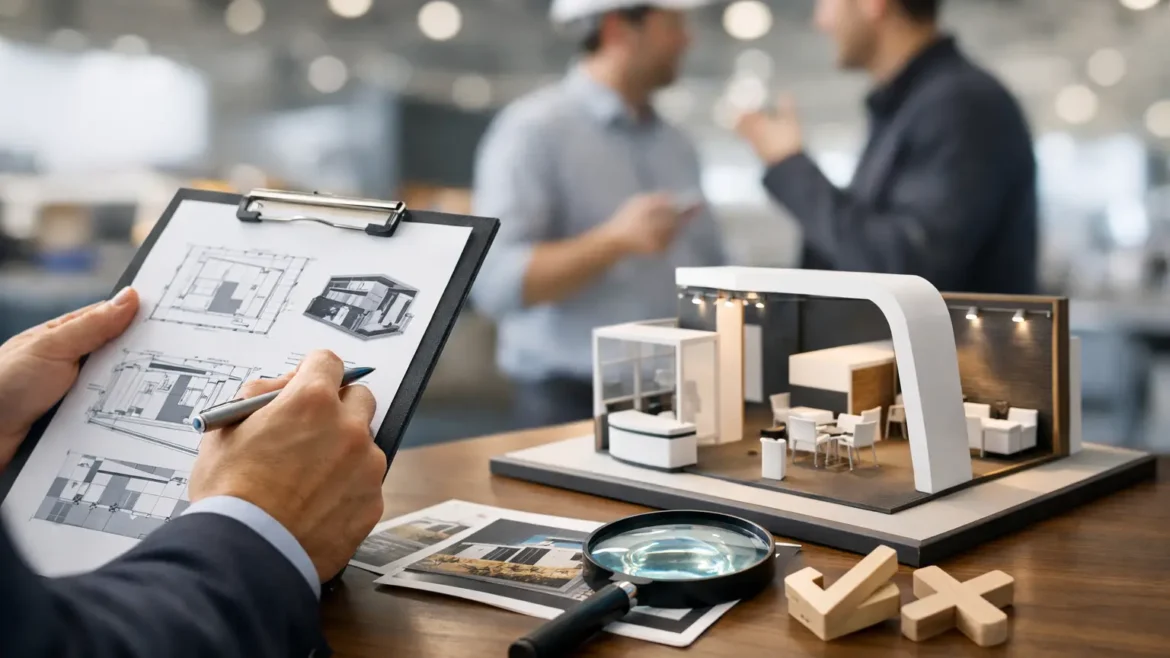
A crowded exhibition hall makes one fact very clear: a stand is not judged by its rendering. It is judged by whether it is built on time, reflects the brand accurately, attracts the right visitors, and performs under real venue conditions. That is why clear 展会搭建公司评价标准 matter before a contract is awarded. For UAE exhibitors, the right builder is not simply the company with the most attractive proposal. It is the partner that can turn a commercial objective into a well-managed physical environment.
Why the right evaluation criteria protect the project
An exhibition stand is a short-life build with high business stakes. A delayed delivery, missed electrical requirement, weak finishing detail, or confusing visitor layout can affect meetings, lead generation, and brand perception in a matter of days. The price of correcting problems on-site is usually far higher than identifying gaps during supplier selection.
The best evaluation process considers creative capability and delivery control together. A bold concept has limited value if the contractor cannot fabricate it accurately, manage venue rules, coordinate logistics, and install safely within the allocated build-up period. Equally, a technically capable contractor may not be the best choice if the design feels generic and fails to give the brand a reason to be remembered.
For marketing teams, procurement managers, and event coordinators, the goal is not to find the lowest quotation. It is to appoint a stand builder with a clear scope, accountable team, and production capacity that matches the project.
展会搭建公司评价标准 that matter before appointment
1. Review relevant, comparable project experience
Start with work that is genuinely similar to your requirement. A contractor that has built compact shell-scheme upgrades may not be the right fit for a large custom pavilion, double-deck structure, retail-style activation, or product demonstration space. Ask to see completed projects that reflect your stand size, sector, design complexity, and venue type.
Look beyond polished images. Strong portfolio evidence should show close-up finishing, material transitions, lighting, branded graphics, storage integration, counters, and visitor flow. If possible, ask how the contractor handled a difficult brief, late design change, limited access window, or venue restriction. The answer reveals more than a gallery of renders.
2. Test whether the design serves a business purpose
A visually distinctive stand should also work hard for the sales team. Evaluate the proposal against practical questions: Can visitors identify the brand from the aisle? Is there a natural route from first attention to product discovery and conversation? Are meeting areas private enough without becoming isolated? Is storage sufficient for brochures, personal items, samples, and staff supplies?
The right design depends on the event objective. A product launch may need a focal display and crowd management. A B2B exhibitor may prioritize qualified conversations, demonstration zones, and hospitality. A retail brand may need a more open, tactile experience. Ask the builder to explain the layout decisions rather than only presenting visual effects.
3. Confirm in-house fabrication and quality control
A company that controls fabrication in-house generally has more direct oversight over materials, joinery, metalwork, finishing, graphics, and last-minute adjustments. This does not mean every component must be made internally. Specialist elements such as AV, lighting, or complex interactive technology may require trusted partners. What matters is that one accountable team controls quality and coordination.
Ask where the stand will be manufactured, who supervises production, and how the company checks quality before dispatch. Request material samples or finish references for major surfaces when the brief includes premium paintwork, timber textures, acrylic, metal, fabric, or illuminated elements. A proposal should specify materials clearly enough to prevent expensive substitutions later.
4. Assess project management, not just design talent
The project manager is often the difference between a smooth build and a stressful exhibition week. This person should coordinate design approvals, shop drawings, production milestones, technical submissions, delivery, installation, and handover. You need to know who your day-to-day contact will be and how decisions will be documented.
In Dubai and across the UAE, venue manuals, access schedules, health and safety rules, electrical requirements, and organizer approvals can vary by event. An experienced exhibition contractor plans for these conditions early rather than treating them as site-day surprises. Ask how the team handles technical forms, stand plans, risk documentation, and coordination with official service providers where required.
5. Compare quotations by scope, not by headline price
A low quote can appear attractive because key items are missing, described vaguely, or assumed to be supplied by the client. Compare each proposal line by line. The scope should identify design development, fabrication, flooring, wall finishes, furniture, lighting, electrical work, graphics, transport, installation, dismantling, and on-site supervision.
Clarify whether venue service charges, permits, power consumption, internet, hanging points, cleaning, AV equipment, and storage are included or excluded. There is no universal package because every exhibition and venue has different requirements. Transparency is the standard to look for. A good builder will explain the cost drivers, identify optional upgrades, and flag exclusions before they become variation orders.
6. Check timeline discipline and contingency planning
Exhibition deadlines do not move easily. The stand must be approved, manufactured, delivered, and installed within fixed windows. Evaluate the contractor’s proposed schedule from first briefing through final handover. It should include design sign-off dates, production release, graphic approval, venue submission deadlines, installation timing, and a realistic allowance for revisions.
Also ask what happens if artwork arrives late, an approved material becomes unavailable, or venue access changes. A dependable contractor does not promise that nothing will go wrong. Instead, it explains its fallback options, approval process, and escalation route. This is particularly valuable for regional or international brands coordinating multiple stakeholders.
7. Evaluate on-site installation capability and safety
The team that fabricates the stand should be matched by a capable installation crew. On-site work requires more than assembling panels. It involves protecting finished surfaces, coordinating deliveries, managing tools and waste, completing electrical connections correctly, and responding quickly when the organizer requests an adjustment.
Safety deserves the same scrutiny as appearance. Ask about site supervision, crew credentials where applicable, structural considerations for taller builds, and procedures for safe dismantling. A well-built stand should look refined from opening morning through the final visitor, not only during the first walkthrough.
8. Look for accountability after handover
The builder’s responsibility should not end when the stand is photographed. Confirm who remains available during the show for urgent fixes, replacement graphics, lighting issues, or operational adjustments. Even carefully planned stands can need support once products, staff, and visitors enter the space.
After the event, a strong contractor can also help determine what should be retained, reused, modified, or redesigned for future exhibitions. Reusable structural elements can reduce cost and waste for brands with recurring event calendars, but only when storage, refresh requirements, and design flexibility are considered from the start.
A practical scorecard for comparing proposals
To keep selection discussions objective, assign a weighted score to each candidate after presentations and quotation reviews. The exact balance depends on the project, but the following framework works well for custom exhibition builds:
| Evaluation area | Suggested weight | What to verify | |—|—:|—| | Relevant portfolio and sector experience | 15% | Comparable stands, finish quality, venue familiarity | | Design quality and visitor journey | 20% | Brand visibility, layout logic, functional zones | | Fabrication capability and materials | 15% | Workshop control, samples, quality process | | Project management and approvals | 15% | Named lead, schedules, technical coordination | | Commercial clarity | 15% | Detailed inclusions, exclusions, variation process | | Installation, safety, and support | 10% | Site crew, supervision, live-event response | | Timeline and contingency plan | 10% | Milestones, backup options, handover commitment |
Price should be assessed within commercial clarity, not treated as the only decision factor. If two bids are far apart, investigate the reason. One may use more durable materials, include more venue services, provide stronger on-site staffing, or allow for details the lower quote has excluded. The best value is the proposal that gives the brand confidence in what will be delivered, when, and by whom.
Red flags that deserve a second conversation
Be cautious when a contractor offers a highly detailed visual concept but cannot provide a precise scope of work. The same applies to vague statements such as “premium materials” without samples, specifications, or named finishes. Ambiguity creates room for disagreement once production has started.
Another warning sign is a proposal with no named project contact, no installation plan, or no questions about venue requirements. A capable builder asks focused questions early because stand construction is shaped by dimensions, load-in access, rigging restrictions, power needs, build-up dates, and operational goals.
Finally, do not confuse fast replies with reliable execution. Responsiveness is valuable, but it should be supported by a clear process, proven manufacturing capability, and accountability on-site. For a high-visibility event, those are the factors that protect both the schedule and the brand.
Before approving the next stand build, invite finalists to walk through their proposal as if the project were already in production. The company that can explain each decision, cost, deadline, and responsibility clearly is more likely to build an exhibition environment that earns attention for the right reasons.