
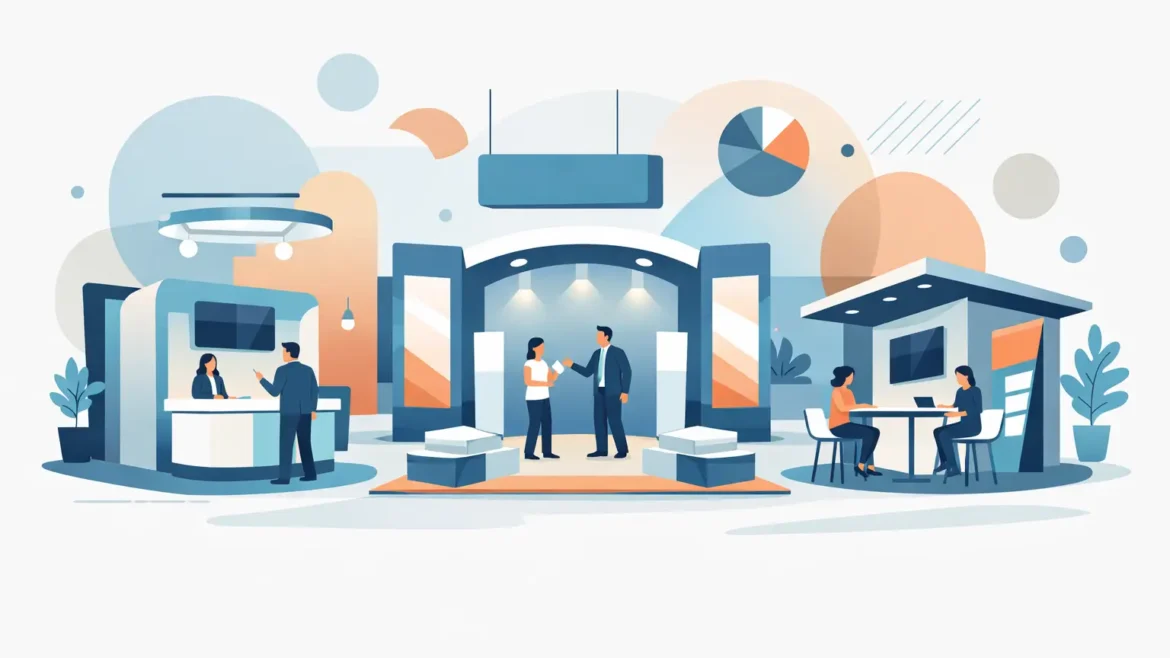
A busy exhibition aisle gives a brand only a few seconds to earn a second look. The strongest exhibition stand design ideas do more than fill a floor space with graphics and furniture. They make the offer clear from a distance, give visitors a reason to enter, and create the right setting for a commercial conversation.
For exhibitors in Dubai and across the UAE, the challenge is often bigger than choosing a stylish look. The stand must suit the venue rules, fit the build schedule, carry the brand properly, support product demonstrations, and arrive ready for a high-pressure event day. Good design starts with those realities, not with a decorative render.
Exhibition Stand Design Ideas Built for Results
1. Design for the three-second view
Start with what a visitor can understand while walking past. A clear brand name, one strong visual, and a concise message will usually outperform a wall crowded with service lists and campaign copy. If your company sells a complex B2B solution, the distant message should communicate the category or benefit, while the detailed explanation belongs inside the stand.
This is especially valuable at large trade shows where neighboring displays compete for attention. Think of the front elevation as a billboard with a job to do: stop the right person, not every person.
2. Create one visual focal point
Every successful stand needs a feature that gives people a reason to look twice. It could be a large-format LED wall, a suspended branded element, an illuminated product display, a sculptural entrance, or a dramatic material finish. The choice depends on the product and the budget, but the principle stays the same: give the space a recognizable center.
A focal point should support the brand rather than compete with it. A technology company may use responsive screens and clean light lines, while a premium real estate brand may benefit from architectural textures, scale models, and a refined hospitality-led setting.
3. Use height with a purpose
Vertical structures help a stand get noticed above the aisle, particularly in crowded halls. Raised signage, towers, halo features, and permitted hanging elements extend visibility beyond the footprint. They also help visitors find the stand again after moving through the event.
Height brings trade-offs. Venue regulations, rigging approval, engineering requirements, and additional installation time can affect the plan. When an overhead feature is not practical, a tall back wall with bold lighting and strong logo placement can still create presence.
4. Build an entrance, not a barrier
A stand can look impressive yet feel unapproachable if the front is blocked by counters, furniture, or solid walls. Keep the visitor journey open. Use flooring changes, illuminated frames, curved forms, or display zones to suggest where people should enter without forcing them through a narrow opening.
Corner and island stands benefit most from this approach because they have multiple access points. A smaller inline stand may need a more controlled entry, but it should still provide an obvious place to pause and engage.
5. Let lighting shape the experience
Lighting is one of the fastest ways to move a stand from functional to high-impact. It can highlight products, separate meeting areas, add depth to graphics, and create a mood that matches the brand. Warm lighting can make a hospitality or luxury space more inviting; crisp white lighting often suits technology, healthcare, and precision-led products.
Avoid treating lighting as an afterthought. Poorly placed fixtures can create glare on screens, wash out printed graphics, or leave the presenter standing in shadow. Plan lighting alongside the layout, displays, and power requirements.
6. Turn products into demonstrations
If a product can be demonstrated, make the demonstration part of the design. Visitors are more likely to remember a working interaction than a brochure rack. A live demo counter, touchscreen configurator, sample library, or product comparison wall gives staff a natural opening line and helps qualify interest.
The experience must be reliable. A complex digital activation may attract attention, but it needs tested hardware, stable content, and a backup plan. Sometimes a well-designed physical sample display is more effective than a screen-heavy concept that fails under event conditions.
7. Create zones for different conversations
Not every visitor needs the same interaction. An effective stand often includes a fast engagement area at the edge, a demonstration zone in the center, and a quieter space for serious discussions. This allows the sales team to keep foot traffic moving without losing high-value prospects.
For a compact footprint, zones can be created with lighting, flooring, furniture placement, or partial partitions rather than full walls. The goal is to add function without making the stand feel cramped.
8. Make meeting areas feel intentional
A table and chairs placed at the back of a stand are not automatically a meeting space. For longer discussions, use comfortable seating, a degree of acoustic separation, accessible charging, and enough surface area for materials or a laptop. If privacy matters, consider slatted screens, integrated greenery, frosted panels, or a semi-enclosed room.
Too much enclosure can reduce visibility and make a smaller stand feel closed off. The right balance depends on whether your event goal is lead volume, partner meetings, product launches, or contract discussions.
9. Use materials that reinforce the brand
Materials communicate before anyone reads a word. Timber and textured finishes can add warmth and craftsmanship. Metal, glass, and high-gloss panels can create a sharper contemporary feel. Fabric graphics may be efficient for large visual areas, while dimensional lettering gives a brand more depth and permanence.
Material choices should also reflect how the stand will be used. A one-time activation may prioritize speed and visual impact. A stand planned for multiple events should favor durable, modular components that can be reconfigured, refreshed, and stored efficiently.
10. Give visitors a reason to stay
Attraction gets visitors to the stand; value keeps them there. A short educational session, interactive assessment, product personalization, scheduled presentation, or useful takeaway can turn passive traffic into active engagement. The best idea is relevant to the brand, not a generic giveaway that draws people with no buying interest.
For example, a workplace solutions company could offer a quick planning consultation, while a retail supplier could build a touch-and-compare display. The activity should generate meaningful conversations, not simply create a queue.
11. Keep brand messaging disciplined
One stand should not try to communicate every service, product line, award, and campaign at once. Choose a primary message, then support it with a few well-organized details. Large graphics should be readable from a distance, while product information and case studies can sit closer to the visitor journey.
Consistency matters across signage, staff attire, digital content, printed materials, and follow-up assets. When all touchpoints tell the same story, the stand feels more credible and visitors leave with a clearer memory of what the business offers.
12. Plan the build as carefully as the concept
A strong concept only works if it can be fabricated, transported, installed, and handed over on time. Early coordination between design, exhibition stand contracting, electrical work, AV, graphics, furniture, and venue requirements prevents late compromises. It also gives the team time to resolve practical details such as storage, cable routes, fire-rated materials, accessibility, and cleaning access.
This is where integrated delivery makes a measurable difference. Rather than treating design and construction as separate jobs, the most effective projects consider fabrication methods and site conditions from the first layout. The result is usually more accurate, more efficient, and less stressful during move-in.
From a Good Concept to a Stand People Remember
Before approving a direction, test it against simple commercial questions. Can a first-time visitor understand the offer quickly? Does the layout help staff start conversations? Is there enough room for demonstrations and qualified meetings? Can the stand be built safely within the available timeline and budget? A visually ambitious idea that ignores these questions can become expensive friction on site.
The best exhibition stands feel distinctive because every detail has a role. Their graphics attract, their layout guides, their materials support the brand, and their construction holds up under real event pressure. Creative Roots approaches exhibition environments as complete branded spaces, bringing design, fabrication, contracting, and installation into one coordinated process.
Choose the ideas that fit your audience and event objective, then give them the practical support to work on the show floor. That is how a stand becomes more than a display and starts creating real business opportunities.