
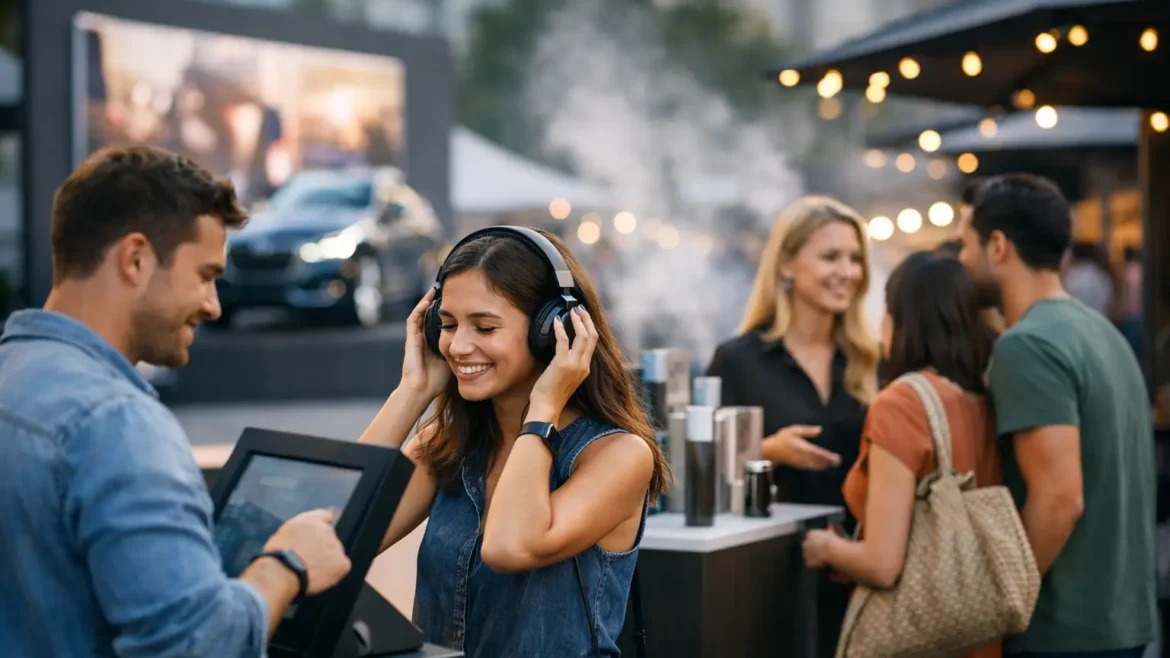
A crowded exhibition hall, a busy mall atrium, or a launch event gives a brand only a few seconds to earn attention. Brand activations make those seconds count by turning a physical space into a reason to stop, participate, remember, and respond. For commercial teams, the objective is not simply to create an attractive setup. It is to build an environment that supports a clear business result.
The strongest activations combine creative impact with practical delivery. They consider visitor flow, staffing, product interaction, content capture, lead collection, safety requirements, installation windows, and what happens to the structure after the event closes. When these details are handled from the outset, a campaign feels effortless to the visitor and controlled to the project team.
What Makes Brand Activations Work?
A brand activation is a temporary or semi-permanent physical experience designed to create direct interaction between a brand and its audience. It may be an exhibition stand, a retail pop-up, a mall kiosk campaign, an in-store product demonstration, a roadshow unit, or a hospitality installation. The format changes, but the commercial job remains the same: move people from awareness toward a specific action.
That action depends on the campaign. A B2B exhibitor may need qualified sales conversations. A retailer may want product trials and immediate purchases. A property developer may need registrations from prospective buyers. A new consumer product may need social content, sampling, and market feedback before a wider rollout.
This is why decoration alone is not activation. Oversized graphics and premium finishes can draw initial interest, but they do not automatically create engagement. The space needs a useful invitation: test a product, personalize an item, compare options, join a demonstration, book a consultation, or access a limited offer. Give visitors a clear reason to step inside and a simple next step once they do.
Start With the Business Outcome, Not the Structure
Many activation projects begin with a request for a booth size, kiosk footprint, or visual reference. Those details matter, but they should follow the campaign objective. Before design begins, define what success should look like in operational terms.
If the goal is lead generation, decide what qualifies as a lead and how the team will capture it. If the goal is sales, identify where transactions happen, how stock is stored, and whether the experience can handle peak footfall. If the goal is brand awareness, plan for the visual moments people will photograph and share rather than relying on a logo wall alone.
A useful brief answers a few direct questions. Who needs to visit? What should they do? What message must they leave with? What evidence will show that the activation worked? These answers shape the layout far more effectively than a mood board can.
For example, a technology company exhibiting to procurement teams may need semi-private meeting zones, product demo counters, and secure storage. A beauty brand in a mall may need open sightlines, trial stations, fast-moving queues, and hygienic sample management. Both can be visually distinctive, but their layouts should not look or operate the same way.
Build an Experience Around Visitor Flow
Physical environments influence behavior. An activation that looks impressive from a distance can still underperform if visitors cannot tell where to enter, what to do, or where to wait. The best designs use circulation as part of the campaign strategy.
Start with visibility. Your key message and hero product should be understandable from the main approach route, not only once a visitor is standing inside the space. Then create a natural progression: attract attention, encourage entry, enable interaction, capture the response, and direct the visitor to a clear exit or next action.
Avoid placing every feature at the front edge. A crowded entrance can discourage visitors from stepping in, especially at a trade show where people are already navigating narrow aisles. Instead, use the perimeter to signal the experience and reserve the central area for the most valuable interaction. In retail or mall settings, the balance changes. Open access may matter more than a defined entry, particularly for a kiosk serving high volumes of passing traffic.
There is always a trade-off between openness and control. An open layout welcomes more people but can make conversations, lead capture, and security harder to manage. A more enclosed environment feels premium and supports focused demonstrations, but it may reduce walk-in traffic. The right choice depends on audience behavior, product complexity, and the event setting.
Make the Brand Physical, Not Just Visible
The most memorable activations translate brand personality into materials, movement, service, and interaction. A company known for speed might use a fast challenge, live customization, or rapid consultation format. A premium brand may use restrained lighting, considered finishes, personal appointments, and a quieter hospitality area. A product-led brand should let the product do real work rather than hiding it behind oversized decorative elements.
This is where custom fabrication creates an advantage. Bespoke joinery, display fixtures, branded counters, interactive zones, lighting features, and integrated screens can be built around the actual campaign rather than forced into a rented shell. The result is more coherent because the physical components support the story from every angle.
Custom does not always mean complex. In fact, a focused activation often performs better than one packed with disconnected features. One strong interaction that visitors understand immediately can be more valuable than multiple screens, giveaways, and games competing for attention. The design should make the intended behavior easy, not ask visitors to decode the concept.
Plan the Operational Details Early
A campaign can have a strong idea and still fail on site through preventable delivery issues. Power locations, internet access, approvals, venue rules, storage, delivery timing, build access, staffing, cleaning, and dismantling should be part of the activation plan from the first consultation.
In Dubai and across the UAE, venues, malls, and exhibition organizers often have specific technical and safety requirements. Materials may need approvals, installation work may be limited to overnight access windows, and mall campaigns may need to operate around public circulation without disrupting tenants. These constraints are not an afterthought for the contractor. They directly affect what can be built, how it is installed, and how reliably it performs during the campaign.
Working with one team that can develop the concept, manufacture the elements in-house, coordinate the build, and complete on-site installation reduces handovers. It also makes revisions more manageable. When a display needs a stronger product shelf, a branded counter needs cable management, or a kiosk needs more back-of-house storage, the solution can be resolved through design and fabrication rather than passed between separate vendors.
Reusable components deserve consideration as well. For recurring exhibitions, roadshows, or seasonal mall campaigns, a modular framework can lower future production costs while allowing graphics, product displays, and interactive details to change. A fully one-off build may be the better option for a major launch where the experience itself must create a single high-impact moment. Budget, campaign frequency, transport, and storage capacity all influence that decision.
Measure More Than Footfall
Footfall is useful, but it is only the beginning. A high visitor count can look impressive while producing few meaningful conversations or sales. Measurement should reflect the original objective and the level of investment.
For a B2B exhibition, track qualified leads, meetings booked, demonstration completions, and post-event opportunities created. For retail activations, track transactions, conversion rate, average basket value, samples distributed, and repeat visits. For awareness-led campaigns, assess content created, QR scans, email sign-ups, time spent in the space, and audience sentiment gathered by staff.
The quality of the team on the floor matters as much as the physical build. Staff need a simple engagement script, a clear understanding of lead criteria, and a defined route for handing off serious prospects. If scanning a QR code is the key conversion, make the instruction visible and ensure the landing experience is fast on mobile. If consultations are the goal, provide a practical way to book a time rather than asking visitors to wait indefinitely.
Post-event follow-up should be planned before the activation opens. Leads lose value quickly when details sit in a spreadsheet for days. Assign ownership, establish response times, and separate casual interest from sales-ready opportunities. The physical experience creates momentum; the follow-up turns that momentum into commercial value.
Choose a Delivery Partner That Can Build the Idea
An activation partner should be able to challenge a concept constructively, not just accept a visual brief. Ask how the design handles audience flow, product access, structural safety, venue regulations, storage, installation, and measurement. A render can sell an idea, but the real test is whether that idea can be manufactured, transported, assembled, and operated as intended.
Creative Roots brings exhibition stand construction, mall kiosk manufacturing, interior fit-outs, branding, printing, and display production under one delivery model. That breadth is particularly useful when a campaign needs more than a temporary wall system – such as custom retail fixtures, demonstration counters, branded displays, or a space that can evolve from an event feature into a longer-term commercial installation.
A successful activation should leave your audience with a useful memory and your team with a measurable next step. Start with the behavior you want to create, then build every visual and operational decision around making that behavior easy.