
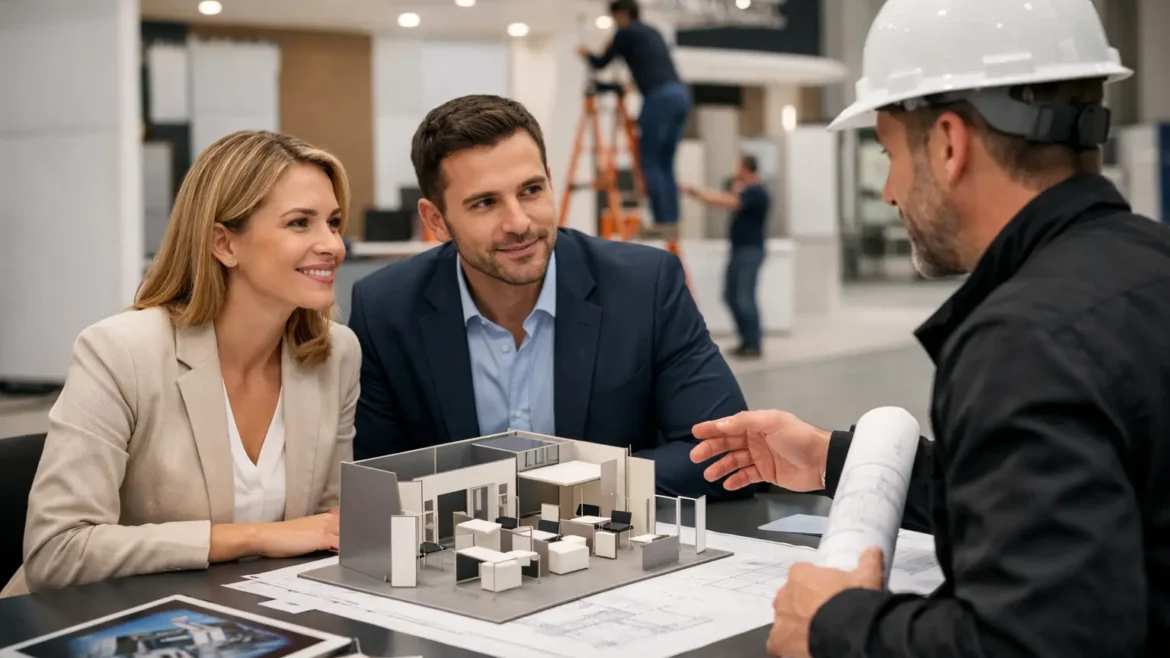
A glossy stand concept can win approval in a meeting and still fail where it matters most: on the exhibition floor. Late access, missing materials, weak lighting, unclear technical drawings, or an installation team that cannot adapt can quickly turn a high-visibility event into an expensive problem. Effective exhibition contractor selection is therefore not about finding the lowest quote or the most dramatic render. It is about choosing a build partner that can turn your brand requirements into a finished environment, on time and to the correct standard.
For exhibitors in Dubai and across the UAE, the pressure is especially real. Major venues operate with strict access windows, organizer rules, health and safety requirements, and limited time for installation. Your contractor needs creative capability, but also the manufacturing control, local experience, project coordination, and on-site discipline to deliver under those conditions.
Start With the Outcome, Not the Stand Size
Before requesting proposals, define what the exhibition needs to achieve. A 36-square-meter stand designed for lead generation has different priorities from a product-launch space, hospitality lounge, retail-style activation, or meeting-focused corporate stand. If the brief only says, “We need a premium booth,” every contractor will interpret premium differently.
Set the commercial priorities early. You may need strong product visibility, private meeting areas, a hospitality counter, demonstration space, storage, digital screens, or a feature that pulls visitors from across the aisle. Also identify what success looks like after the event: more qualified leads, distributor meetings, media content, product trials, or stronger market positioning.
This gives contractors a useful framework for design and costing. It also helps your internal stakeholders make decisions faster. A stand should not be evaluated only by how it photographs. It should support the conversations, traffic flow, staffing, and customer experience your team needs during the show.
What to Assess in Exhibition Contractor Selection
A capable exhibition partner brings several disciplines together. Design matters, but it is only one part of the job. The best contractor for your project depends on the stand complexity, venue, deadline, budget structure, and the level of coordination you require.
Look Beyond the Portfolio Images
Portfolio work is valuable, but ask what sits behind it. Was the contractor responsible for design only, or did they fabricate, transport, install, dismantle, and manage venue coordination? A strong project photograph does not automatically prove a contractor can deliver a complicated build.
Review work that resembles your needs in scale or function. If you need a double-deck structure, a product demonstration zone, a retail display system, or integrated LED features, ask to see relevant examples. Look for clean finishing, considered sightlines, readable branding, purposeful lighting, and details that hold up at close range.
It also helps to ask how the contractor handled constraints. A practical partner can explain how they solved restricted ceiling heights, late artwork updates, power limitations, venue regulations, or tight build schedules. That conversation tells you far more than a gallery of renders.
Confirm In-House Fabrication and Build Control
Contractors that rely entirely on third-party workshops can still deliver good work, but more handoffs often mean less direct control over quality, timing, and last-minute changes. For bespoke exhibition stands, in-house manufacturing is a major advantage because the design, joinery, metalwork, printing, finishing, and project teams can coordinate directly.
Ask where the stand will be built and who manages quality checks before it reaches the venue. Request a workshop viewing or pre-build inspection for larger projects. This is the best time to confirm finishes, brand colors, graphics placement, furniture, counters, storage access, and screen integration. Correcting an issue in the workshop is far easier than correcting it during an overnight venue build.
A contractor should also be clear about what is custom-built versus rented or sourced externally. Neither option is inherently wrong. Rental systems can be cost-effective for straightforward stands or repeat exhibitors, while custom fabrication gives more freedom for distinctive forms, material finishes, and long-term brand impact. The right choice depends on the project, not on a one-size-fits-all promise.
Test the Design Process
A good stand design is commercially useful, technically buildable, and aligned with your budget. Be cautious if a concept looks impressive but arrives without clear dimensions, material suggestions, visitor flow, or practical detail. Ask how the contractor moves from initial consultation to 3D design, technical drawings, production, installation, and handover.
The design stage should include an honest discussion about budget. If your brief requires premium finishes, custom ceiling features, extensive LED walls, specialty flooring, and intricate structures, the contractor should explain where costs will rise. A reliable partner does not simply agree to every request. They offer alternatives that protect the visual impact while keeping the project viable.
Consider brand functionality as well. Is the logo visible from the main approach? Is there enough room for staff to work without blocking visitors? Can product demonstrations happen safely? Is storage adequate? Visitors should understand what your company offers within seconds, even when the exhibition hall is busy.
Check Venue Knowledge, Approvals, and Safety
Exhibition contracting is not only construction. Venue procedures can affect structural approvals, electrical connections, rigging, fire safety, access passes, working hours, insurance requirements, and material restrictions. A contractor familiar with regional exhibition venues can identify these requirements early rather than treating them as a last-minute surprise.
Ask who is responsible for submitting drawings and required documents. Clarify whether organizer fees, electrical orders, internet, water, rigging, cleaning, and other venue services are included in the quote or handled separately. Ambiguity here is a common source of budget pressure.
Safety should be part of the proposal, not an afterthought. For taller structures, suspended elements, enclosed rooms, raised platforms, or heavy displays, ask about engineering requirements and installation procedures. The contractor should have a clear method for coordinating trades, managing site access, and completing work within allocated build hours.
Compare Quotes on Scope, Not Just Price
The cheapest quotation is often cheaper because something is missing. It may exclude graphics installation, transport, storage, electrical work, furniture, dismantling, touch-up finishing, venue paperwork, or on-site supervision. Comparing only the bottom-line number makes it difficult to see these differences.
Request an itemized scope that separates design, fabrication, graphics, furniture, AV, lighting, electrical works, logistics, installation, dismantling, and any optional elements. You do not need every minor component priced individually, but you should understand what is included and where provisional allowances apply.
Pay attention to material descriptions. “Wood finish,” “premium flooring,” or “feature lighting” can mean very different things. Ask for specifications, samples, or visual references when the finish is central to the brand experience. If a contractor proposes substitutions, ensure they are approved before production begins.
A higher initial quote can offer better value when it includes proper project management, stronger materials, direct fabrication control, and fewer surprises on site. Conversely, a high quote is not proof of quality. It still needs to be supported by a clear process and relevant delivery evidence.
Meet the Team That Will Deliver the Stand
The sales contact may be knowledgeable, but your event will be delivered by designers, project managers, fabricators, installers, and site supervisors. Ask who your day-to-day contact will be and how updates will be handled. One accountable project manager can prevent small questions from becoming missed details.
Discuss the production timeline in practical terms. When will the design be frozen? When are artwork files due? When can you review samples or a pre-build? What happens if your team needs a change after fabrication begins? A contractor that explains these milestones clearly is more likely to manage the project with discipline.
At Creative Roots, this coordination is built around direct consultation and an integrated design, fabrication, and installation process. For clients, that means fewer gaps between the approved concept and the finished stand on site.
Warning Signs Worth Taking Seriously
Some warning signs are obvious: vague pricing, no written scope, unrealistic delivery promises, or reluctance to discuss approvals. Others are subtler. A contractor who never challenges an impractical request may be prioritizing a sale over delivery. So may one who supplies a striking render but cannot explain how the structure will be built.
Be careful with proposals that arrive unusually fast for a complex brief. Speed is helpful, but a thoughtful quotation requires time to assess dimensions, materials, technical requirements, and site logistics. If the project is substantial, the contractor should ask intelligent questions before committing to a fixed solution.
Poor communication during the sales stage also tends to continue after appointment. If answers are delayed, responsibilities are unclear, or revisions repeatedly miss the brief, treat that as useful evidence. Exhibition deadlines do not leave much room for coordination problems.
Make the Final Decision With a Delivery Lens
The right contractor is the one that can balance ambition with control. You want a partner that understands your brand, proposes ideas with presence, and has the workshop capability and on-site experience to make those ideas real. A beautiful concept is valuable, but a finished stand that opens on time, works for your team, and attracts the right visitors is the real result.
Before signing, hold one final scope review with your chosen contractor. Confirm the approved design, inclusions, payment schedule, artwork deadlines, approval responsibilities, build dates, and handover process. That final conversation is where a promising proposal becomes a well-managed exhibition project.
Choose the team that makes the hard parts visible early, takes ownership of the details, and builds a space your brand can confidently occupy when the doors open.