
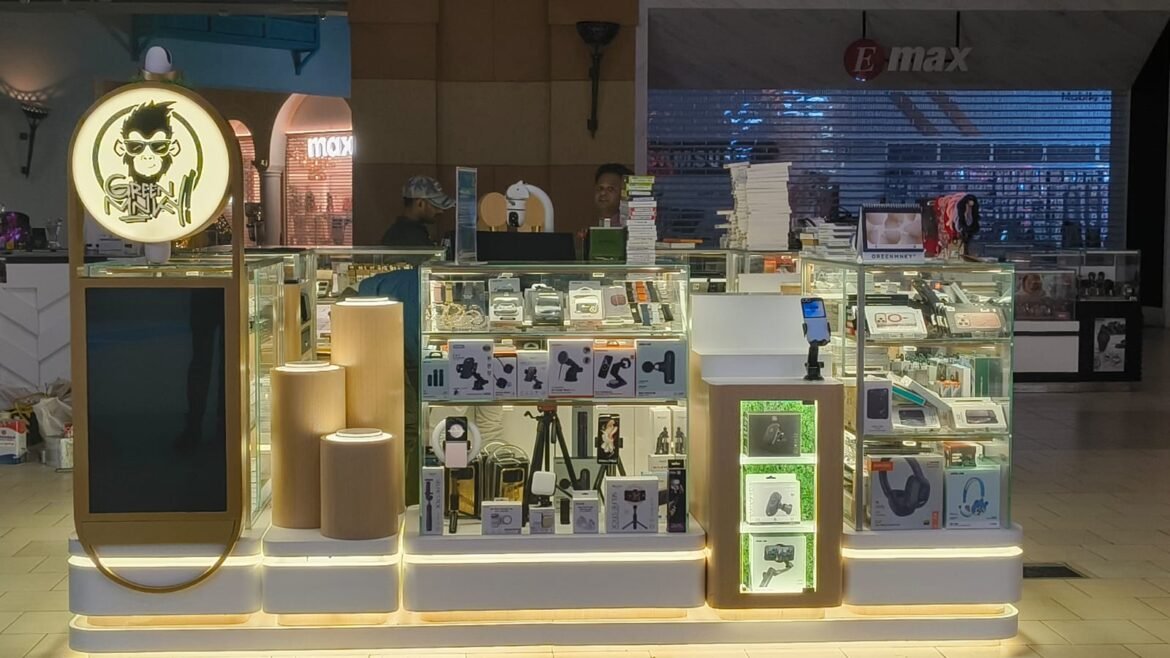
A mall kiosk has only a few seconds to earn attention. In a busy retail environment, shoppers decide whether to stop based on what they can see, understand, and access from the aisle. That is why choosing the right mall kiosk manufacturer Dubai businesses can depend on is not simply a procurement decision. It is a decision about brand visibility, daily operations, mall compliance, and sales potential.
A successful kiosk needs to look distinctive without becoming impractical. It must carry the brand clearly, guide customer movement, protect stock, support staff, and withstand constant use. The strongest projects bring these requirements together from the first design discussion rather than treating fabrication as an afterthought.
What a Mall Kiosk Must Deliver
A kiosk is a compact retail environment, not just a display counter. Every surface has a job. The front elevation draws shoppers in, the counter supports transactions or demonstrations, storage keeps the space organized, and lighting helps products stand out under the mall’s ambient conditions.
For a jewelry, fragrance, cosmetics, telecom, coffee, dessert, accessories, or service brand, the operational requirements can be very different. A fragrance kiosk may need illuminated product shelving and concealed storage. A food kiosk may require practical work zones, durable finishes, equipment coordination, and service access. A mobile accessories kiosk may need secure display systems and fast customer circulation.
The design should respond to the product category and the actual way staff will work. An attractive kiosk with insufficient storage quickly becomes cluttered. A high-impact façade that blocks sightlines can reduce approachability. The right balance is commercial: create a clear reason to stop while making the space efficient enough to run all day.
Choosing a Mall Kiosk Manufacturer in Dubai
Dubai retail projects move quickly, but speed should not mean shortcuts. A capable manufacturer will ask practical questions before promising a price or production date. They should want to know the kiosk footprint, mall location, brand guidelines, product range, electrical needs, stock volume, staffing model, and anticipated opening date.
This early consultation matters because mall kiosks involve more coordination than many businesses expect. A unit may need landlord approval, technical drawings, material specifications, electrical load details, fire and safety considerations, and installation planning outside operating hours. Requirements differ across malls and property operators, so local project experience has real value.
The best manufacturing partner also separates what is visually desirable from what is buildable, maintainable, and approved. A dramatic floating feature, glossy finish, or complex lighting element can look impressive in a rendering. But it needs to be evaluated against structural stability, cleaning requirements, replacement availability, budget, and site restrictions.
Design That Works From Every Side
Unlike a conventional store, a kiosk is exposed from multiple directions. There is no back wall to hide weak branding or unfinished detailing. Shoppers can approach from any side, often while moving quickly through a crowded corridor.
This requires a 360-degree design approach. Brand colors, logos, display zones, and product stories should remain visible without overwhelming the structure. Open sides can invite interaction, while controlled service points can improve security and customer flow. It depends on the product: a sampling kiosk benefits from easy access, while a premium product category may need a more defined service counter and secure presentation.
In-House Fabrication Makes a Difference
When design, fabrication, branding, and installation are managed through separate vendors, details can get lost between handovers. A kiosk may be designed without full awareness of fabrication constraints, or graphics may arrive late and fail to align with the final structure.
In-house fabrication gives the project team closer control over materials, joinery, metalwork, acrylic elements, lighting integration, finishing, printing, and final quality checks. It also allows faster problem-solving when a component needs adjustment before delivery. For custom-built retail units, that control is often the difference between a concept that looks good on screen and a finished kiosk that performs on site.
Materials Should Match the Retail Reality
Kiosk materials must be selected for more than appearance. High-touch counters, drawer handles, display ledges, and base panels face continual wear. A finish that photographs beautifully may not be right for a unit that receives hundreds of customer interactions each day.
Laminates, solid surfaces, powder-coated metal, tempered glass, acrylic, timber finishes, and LED lighting can all play a role in a quality kiosk. The right choice depends on the brand position, operating environment, cleaning routine, and budget. For example, premium gloss surfaces can create a polished look, but they may reveal fingerprints more readily than textured or matte alternatives.
It is also worth planning for maintenance from the beginning. Can staff replace a light strip without dismantling the kiosk? Is there access to power points and equipment? Can damaged panels be repaired or replaced? These details protect the investment long after launch day.
Plan the Inside as Carefully as the Outside
The public-facing design receives most of the attention, yet internal planning determines whether the team can operate comfortably. Staff need room for payment devices, packaging, stock, personal items, cables, cleaning supplies, and equipment. If these functions are not accounted for, the kiosk starts to look disorganized within hours of opening.
A practical layout uses concealed storage intelligently. Drawers, lockable cabinets, under-counter shelving, access panels, and cable management should be built around the operating process. The goal is not to pack every possible feature into a small footprint. It is to prioritize what helps the team serve customers quickly and keep the visible space clean.
For brands offering demonstrations or sampling, the kiosk should also establish a natural customer journey. Where does a shopper first notice the product? Where do they pause? Where does staff interaction happen? Where is the transaction completed? Small layout decisions can influence conversion more than an oversized decorative feature.
Approvals, Logistics, and Installation Need Early Attention
A kiosk project can be delayed even when fabrication is complete if approvals and site logistics have not been planned properly. Mall management may require drawings, material details, method statements, insurance documents, access coordination, and a defined installation schedule.
Experienced contractors build these steps into the project timeline. They understand that delivery is not the finish line. The kiosk still needs to be transported safely, positioned accurately, connected, cleaned, branded, and handed over ready for trading.
Installation conditions also shape the design. Some malls permit work only after closing hours. Others have loading bay rules, lift size limits, restricted access routes, or specific requirements for protecting existing flooring. A modular kiosk design can be useful where access is tight, but excessive segmentation can create visible joints and complicate assembly. The solution should suit the site, not follow a one-size-fits-all formula.
Budget for Value, Not Just the Lowest Quote
The least expensive quotation is not always the lowest-cost outcome. A poorly planned kiosk can create extra spending through rework, delayed opening, material failures, unplanned modifications, and weak customer engagement.
A clear quotation should identify the scope of design, fabrication, finishes, lighting, graphics, delivery, installation, and any approval support. This makes it easier to compare proposals fairly. If one quote appears significantly lower, check whether essential components such as branding, electrical works, storage, transport, or site installation have been excluded.
There are smart ways to control cost without weakening the final result. Focus investment on the areas customers see and touch most often: the main fascia, product displays, lighting, counter finish, and brand graphics. Use durable, efficient materials in less visible internal areas. A capable manufacturer can guide those choices while keeping the kiosk aligned with the brand.
Build a Kiosk That Can Evolve
Retail campaigns change, product ranges expand, and brands often move between locations. A kiosk designed with adaptable graphic panels, adjustable shelving, replaceable display components, and accessible electrical systems can have a longer working life.
This does not mean every unit needs to be fully modular. A permanent premium kiosk may benefit from a more architectural, fixed design. But even then, planning for maintenance and future updates gives the brand more flexibility. Consider how seasonal campaigns, promotional screens, new product launches, or revised pricing visuals can be introduced without rebuilding the entire unit.
Creative Roots approaches kiosk projects as complete retail builds, combining bespoke design, in-house manufacturing, branding coordination, and on-site installation. For businesses planning a kiosk in Dubai, Sharjah, or Abu Dhabi, the most useful first step is a focused consultation around the space, product, operating needs, and launch timeline. A well-planned kiosk does more than occupy a mall corridor. It gives customers a compelling reason to stop.