
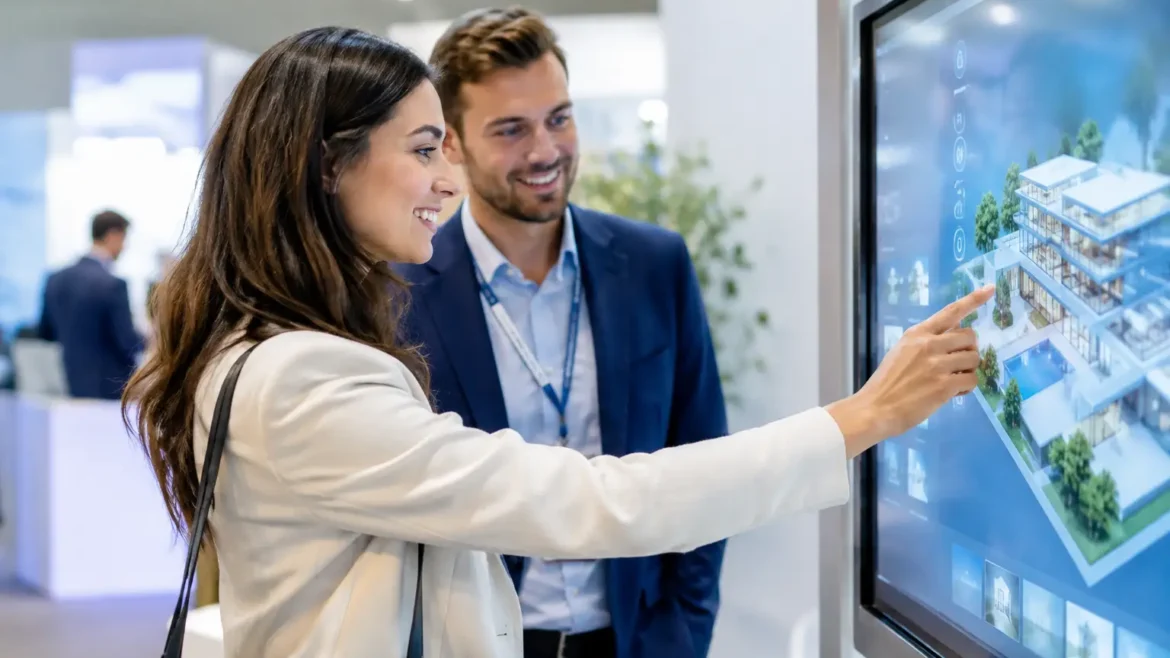
A crowded exhibition hall does not reward the biggest stand. It rewards the stand that gives people a reason to stop, participate, and remember the brand after they leave. That is the commercial value of معارض تفاعلية: interactive exhibition environments designed to turn passing traffic into useful conversations, qualified leads, and stronger brand recall.
For exhibitors in Dubai, Abu Dhabi, Sharjah, and across the UAE, the goal is not to add technology for its own sake. The goal is to build an experience that supports a clear sales outcome. A product demonstration, a hands-on material sample, a quick digital assessment, or a well-planned meeting zone can all create interaction. The right choice depends on your audience, the event, and what your team needs visitors to do next.
What Makes Interactive Exhibitions Work
An interactive exhibition is not simply a stand with a screen. It is a physical brand environment where the visitor has an active role. They can test a product, personalize an item, compare options, respond to a prompt, take part in a demonstration, or speak with the right person at the right point in the journey.
The best interactive spaces make that journey obvious. From the aisle, visitors see a strong visual invitation. Once inside, they understand what is being offered within seconds. After interacting, they have a clear next step: book a consultation, request pricing, scan a code for follow-up, receive a sample, or meet a sales representative.
This flow matters because exhibition visitors make fast decisions. If the message is unclear or the activity feels complicated, even a visually impressive stand can lose attention. Interaction must be simple enough to start immediately and valuable enough to finish.
Start With the Business Objective, Not the Feature
Before selecting touchscreens, games, product displays, or immersive lighting, define what success looks like. A new product launch may need hands-on demonstrations and media-ready moments. A B2B service provider may need private meeting areas and a lead capture process that helps the sales team qualify prospects. A retailer testing a new concept may benefit more from physical product discovery than a large digital installation.
A useful interactive exhibition answers three practical questions:
- Who do we want to attract?
- What do we want them to understand or experience?
- What action should they take before leaving?
These questions prevent a common exhibition mistake: building a busy stand with no commercial direction. A crowd is encouraging, but it is not automatically a result. If staff cannot identify serious prospects, explain the offer quickly, or record visitor information accurately, the activation becomes difficult to measure.
Build Interaction Into the Floor Plan
Layout determines whether an idea works under real event conditions. A feature may look excellent in a 3D render but fail if visitors cannot reach it, staff block the entrance, cables create clutter, or a queue spills into the aisle.
An effective floor plan usually separates the stand into clear zones without making the space feel divided. The outer edge attracts attention with bold branding, product visibility, and an obvious activity. The center supports engagement through demonstrations, samples, or digital interaction. The quieter rear or side area gives sales teams a place to hold focused discussions.
For compact spaces, one strong interaction is usually better than several competing features. A custom-built counter where visitors can test a product may deliver more value than multiple screens showing the same message. Larger island stands have more room for layered experiences, but circulation still needs careful control. Visitors should be able to enter, understand the stand, and move through it without feeling trapped or uncertain where to go.
Create a Reason to Stop From the Aisle
The first three seconds matter. Large-format graphics, a live demonstration, movement, material contrast, or a changing digital visual can create that first pull. But visual impact should always connect to the brand message.
For example, a construction materials brand may use real finishes, mock-up wall sections, and a guided comparison area. A technology company may use a live dashboard that turns a complex service into a simple visual story. A food or hospitality brand may create a sampling experience with a controlled service point. Each approach is interactive, but none relies on a generic attraction that distracts from the offer.
Choose Technology That Supports the Experience
Technology can improve speed, personalization, and lead capture, but it also introduces operational risk. Weak internet, poor screen placement, software glitches, and untrained staff can quickly turn a high-cost feature into a frustration.
Use digital tools when they perform a job that physical design cannot do as effectively. Touch displays are useful for large product ranges, configurable products, and multilingual content. RFID or QR-based journeys can connect a visitor’s physical interaction to follow-up content. LED walls work well for high-impact storytelling, especially on stands with limited product samples.
However, a tactile experience often has greater impact than a screen. People attend exhibitions to see, touch, test, and speak with experts. If your product has a finish, mechanism, texture, or performance benefit, put it in the visitor’s hands. Digital content should deepen the experience, not replace the reason people came to the stand.
Always plan a backup. Product videos should run locally if connectivity drops. Lead forms need an offline option. Power requirements, cable routes, device storage, and overnight security must be addressed during the build stage, not after installation.
Design for Staff, Not Just Visitors
Even the most engaging stand depends on the people operating it. Sales staff need sightlines across the space, easy access to product information, storage for brochures and giveaways, and room to have conversations without shouting over the activity.
Brief the team around the visitor journey. They should know how to welcome someone without interrupting their first interaction, when to demonstrate a feature, and how to move a promising conversation into a meeting area. They should also know the lead qualification criteria before the show opens.
A simple question such as “Are you sourcing for a current project or researching future options?” can help separate immediate opportunities from general interest. That makes the post-event follow-up more focused and helps prove the return on the exhibition investment.
Measure More Than Footfall
Footfall is useful context, but it is not the main result. A smaller number of decision-makers can be more valuable than a large crowd collecting branded items. Set measurable targets before the stand is designed: qualified leads, booked meetings, product demonstrations, sample requests, sales opportunities, or social content created by visitors.
The interaction should make data collection feel natural. Asking for contact details before a visitor receives any value can create friction. It often works better to let them explore first, then offer a personalized result, specification sheet, consultation, or follow-up demonstration in exchange for their information.
After the event, review where visitors stopped, which activities generated conversations, and which leads progressed. These insights should shape the next build. Interactive exhibitions improve fastest when design, sales feedback, and event performance are reviewed together.
Why Turnkey Delivery Matters
A strong concept can lose impact when design, fabrication, technology, logistics, and installation are handled by disconnected suppliers. Timelines tighten quickly before an event, especially when custom structures, lighting, AV equipment, and branded finishes all need to come together on site.
A turnkey exhibition partner can coordinate the project from concept development and 3D design through in-house fabrication, printing, transport, and installation. That approach gives the brand greater control over finish quality, technical integration, and last-minute adjustments. It also reduces the burden on internal marketing and event teams, who should be focused on leads and launch activity rather than contractor coordination.
Creative Roots builds bespoke exhibition stands and interactive brand environments with this execution in mind, combining creative design with fabrication and on-site delivery. The objective is not simply to make a stand look impressive in a render. It is to make it work when the doors open and visitors begin moving through the hall.
The most effective interactive exhibition is the one visitors can understand without explanation, enjoy without effort, and remember for the right reason: it made the brand’s value feel real. Start with the action you want visitors to take, then build every display, material, screen, and conversation point around making that action easy.