
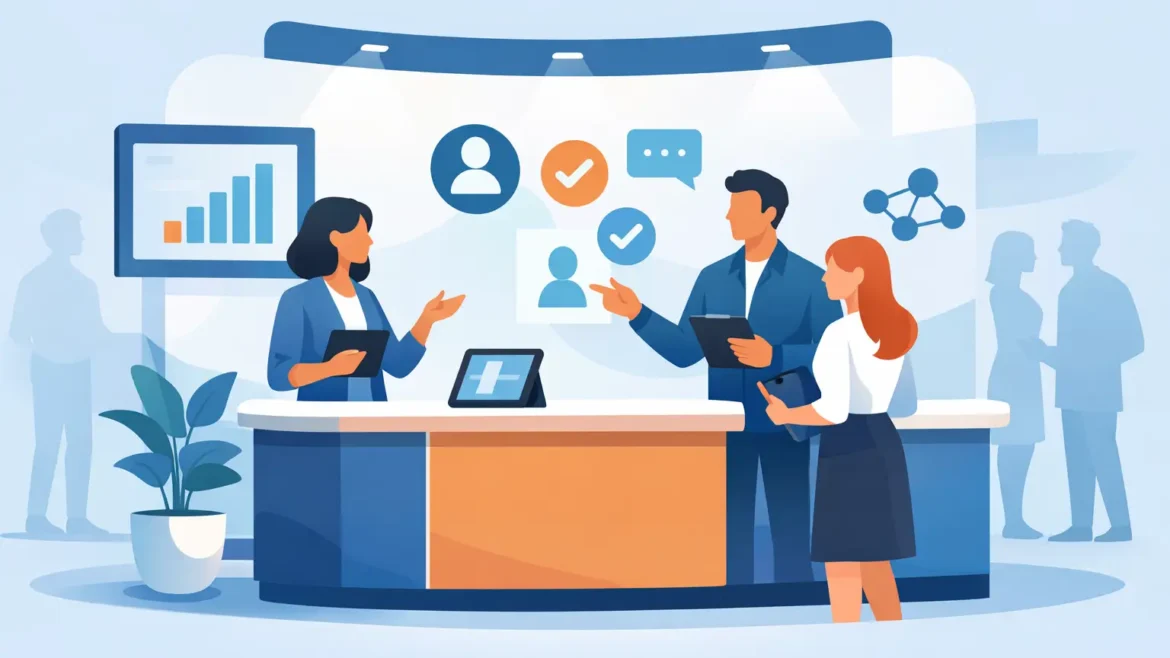
A busy exhibition aisle can make a weak lead process look successful. Your team scans hundreds of badges, collects business cards, and hears plenty of positive comments, yet the sales pipeline is thin two weeks later. Effective trade show booth lead capture design changes that outcome by shaping how visitors enter, engage, qualify, and take the next step with your brand.
For exhibitors, the stand is not simply a visual statement. It is a working sales environment. Every counter, screen, product display, meeting area, and staff position should help turn attention into useful commercial information. The strongest booth designs make that process feel natural to the visitor while giving the sales team the structure they need to follow up with purpose.
Start With the Lead You Actually Want
Before planning a feature wall or selecting finishes, define what a qualified lead means for the event. A retailer launching a new location may need conversations with mall leasing teams. A B2B supplier may be targeting procurement managers, consultants, or project owners. A property business might value investor discussions over high visitor volume.
This decision affects the entire stand. If senior decision-makers are the priority, a crowded game zone may create activity without creating access. A more controlled reception point, comfortable meeting space, and concise product demonstration can be more valuable. If the objective is broad awareness and contact collection, a fast, visible interaction point may be the better choice.
Ask the commercial team what they need to know after each conversation. In most cases, a name and email address are not enough. Useful fields may include the visitor’s company, role, project timeline, budget range, category of interest, and preferred follow-up. Keep the requirements focused. A form with too many questions slows the conversation and encourages rushed, low-quality entries.
Design the Booth Around Visitor Flow
A stand should guide people without forcing them. When the lead capture point is hidden at the back, visitors often browse and leave before anyone speaks with them. When it blocks the front edge of the booth, staff can feel like gatekeepers and passersby may avoid entering altogether.
A practical layout usually creates three zones: an attraction area that earns attention from the aisle, an engagement area where the team starts a conversation or demonstration, and a conversion area for data capture or a deeper meeting. These zones can be compact in a smaller shell-scheme space or more defined in a custom island stand, but the sequence still matters.
Place your main message where it can be understood in a few seconds. Visitors should know who you are, what you offer, and why they should pause. Strong branding brings people in, but clear relevance keeps them there. Large visuals without a business message may attract attention, yet they do little to help staff qualify visitors.
For product-led brands, the demonstration area should be easy to see from the aisle but not so exposed that every conversation becomes a performance. For service businesses, a visual case study, physical material sample, screen presentation, or before-and-after display can give the team a credible starting point. The goal is to create a reason for dialogue, not fill space with decoration.
Give Staff Room to Work
Lead capture often breaks down because the booth is designed only for visitors. Staff need clear sightlines, a place to put brochures or devices, access to power, storage for materials, and enough personal space to hold a conversation without creating a queue.
Reception counters can be useful, but they should not become a wall between your people and your audience. Consider a standing-height counter for quick registrations, paired with a semi-private seating area for high-value discussions. This arrangement allows the team to handle fast traffic while protecting time for serious prospects.
Technology also needs a physical plan. Tablets, badge scanners, charging points, screens, and Wi-Fi backups should be built into the booth design from the beginning. A beautiful stand interrupted by trailing cables, dead devices, or a crowded registration desk quickly loses its premium impact.
Make Data Capture Feel Like Part of the Experience
Visitors rarely want to “fill in a form.” They are more willing to share information when there is a clear exchange of value. That may be a tailored product consultation, a design assessment, access to a relevant case study, an event-only offer, a technical demonstration, or a scheduled site visit.
The offer should match your audience. For a commercial interiors or exhibition supplier, a generic giveaway may draw traffic but attract little buying intent. A short consultation around an upcoming project can produce fewer registrations and much stronger opportunities. It depends on whether the event goal is reach, qualification, or immediate project conversations.
Use a simple verbal transition. After discussing the visitor’s needs, a staff member might say, “We can send a relevant project example and arrange a quick consultation. May I capture a few details?” That is more direct and respectful than asking for information before the visitor understands the benefit.
The information collection method should be fast and reliable. Badge scanning can reduce friction at large exhibitions, but scanned data alone may be incomplete or poorly qualified. Add a short note field or qualification menu so the staff member can record what matters: “opening two retail locations,” “needs a 6m x 6m stand,” or “requesting fit-out budget review.” Those notes give the follow-up team context that a badge scan cannot provide.
Build Staffing Into the Trade Show Booth Lead Capture Design
The best layout cannot compensate for an unprepared booth team. Assign clear roles before the event: who welcomes visitors, who runs demonstrations, who handles senior meetings, and who owns device checks and lead quality. On smaller stands, one person may perform several roles, but the sequence should still be agreed in advance.
Train staff to recognize different visitor types. Some people are ready to discuss a live project. Others are researching suppliers for later, while some are simply collecting ideas. Treating every visitor exactly the same wastes time and makes the experience feel scripted.
A useful qualification conversation can cover four areas without becoming an interrogation: the visitor’s role, the challenge they need to solve, the project timing, and the next action. If there is a genuine opportunity, move them to a meeting area or schedule a post-show call. If their timeline is longer, capture the details and give them a reason to stay connected.
Avoid a common mistake: placing all salespeople behind a desk. Open body language, active conversations near the stand edge, and a visible willingness to help create a more inviting presence. The booth should feel staffed, not guarded.
Use Meeting Spaces With Intention
Private meeting areas can improve lead quality, especially for exhibitors selling complex services, high-value products, or project-based solutions. They create a calmer setting for budgets, timelines, specifications, and stakeholder discussions. But an oversized meeting room can consume valuable floor space and make a booth look closed from the aisle.
The right balance depends on expected traffic and deal size. A brand exhibiting at a design, retail, or property event may benefit from one enclosed or semi-enclosed meeting area plus an open consultation table. This gives serious prospects privacy without turning the entire stand into a back-office environment.
Acoustic treatments, thoughtful lighting, and comfortable seating matter here. They communicate that the brand is prepared for a real business conversation, not just a quick promotional interaction. For a custom-built stand, these details can be integrated into the structure rather than added as an afterthought.
Measure More Than Scan Volume
A high number of contacts can look impressive in an event report, but it is not a complete measure of success. Track the source of leads, qualification level, meetings booked, follow-up response, opportunities created, and eventual project value. These numbers reveal whether the booth is attracting the right audience and whether your staff process is working.
Review the data while the event is still running. If the team is receiving many low-value scans, adjust the conversation opener or the offer. If qualified visitors are waiting too long, add another capture point or move a staff member from a less active area. Exhibition design and event delivery work best when there is room to respond on the ground.
Plan the Follow-Up Before the Stand Is Built
The real test of lead capture happens after visitors leave the venue. Set response standards before the event opens. Hot leads may require a same-day call or a scheduled meeting confirmation. Warm leads might receive a tailored email with the relevant material discussed at the booth. Generic, delayed outreach makes even a strong first impression fade quickly.
Connect the booth experience to this follow-up. If a visitor discussed a retail kiosk, send material related to kiosk design and build, not a broad company presentation. If they asked about an exhibition project, refer to the size, location, and deadline they mentioned. Specificity shows that your team listened.
Creative Roots approaches exhibition spaces as built commercial environments, where brand presence and practical delivery need to work together. When layout, fabrication, technology, staffing, and follow-up are considered as one plan, the stand has a better chance of producing business rather than just foot traffic.
Your next booth does not need more features for the sake of spectacle. It needs a clear reason for the right people to stop, a comfortable path to talk, and a simple way to continue the conversation after the show floor closes.