
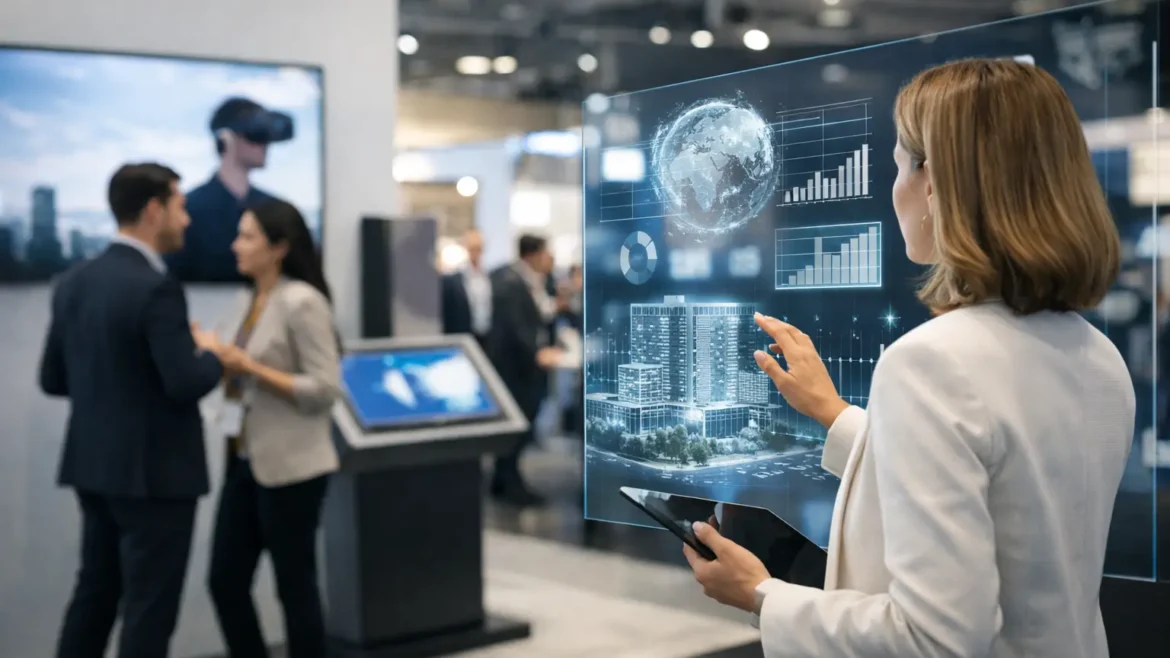
A crowded exhibition hall gives brands only a few seconds to earn attention. That is why exhibition technology trends are no longer about adding a screen to a stand and calling it innovation. The right technology has to stop the right visitor, communicate value quickly, support meaningful conversations, and give the sales team a clear next step.
For exhibitors in Dubai and across the UAE, the most effective event environments now combine digital interaction with strong physical construction. Technology should work with the stand layout, lighting, branding, product display, and visitor flow. If it creates queues, requires constant troubleshooting, or distracts from the commercial message, it is not helping.
Exhibition Technology Trends Built for Better Engagement
The strongest trends are practical. They improve visibility, make complex offerings easier to understand, or turn a short interaction into a qualified lead. They also need to suit the exhibition venue, the audience, the size of the stand, and the objective of the event.
Immersive LED walls with a clear job to do
Large-format LED walls remain a high-impact choice, especially in halls where every brand is competing for sightlines. But the content matters more than the screen size. A loop of generic corporate visuals may look polished from a distance while doing very little to explain why visitors should step onto the stand.
The better approach is to design LED content around the visitor journey. Attract attention with motion and a strong headline, then show product benefits, project visuals, demonstrations, or data that makes the offer easier to understand. Content should be readable from different distances, with short sequences that still make sense when a visitor joins midway through the loop.
LED can also shape the architecture of a custom-built stand. It may become a feature wall, a product backdrop, a curved focal point, or a suspended visual element. This requires early coordination between the exhibition stand designer, fabricators, AV supplier, and venue team. Cable routing, screen access, ventilation, load requirements, and safe installation should be resolved before production begins, not during setup.
Interactive product demonstrations
Many B2B products, property concepts, technical services, and retail systems are difficult to explain through printed graphics alone. Touchscreens, tablets, interactive kiosks, and digital configurators allow visitors to explore information at their own pace before speaking with a representative.
For a property-focused business, this might mean an interactive map, unit comparison tool, or walkthrough of amenities. For a manufacturer, it could be a product selector that shows specifications and use cases. Retail brands can use digital displays to let visitors customize a product, browse collections, or view point-of-sale concepts in different store formats.
The trade-off is simplicity. An interactive station with too many menus often becomes a bottleneck, while a complicated interface can leave visitors waiting for staff assistance. Limit the experience to one useful action: compare, configure, explore, register, or request a quote. The physical counter, screen height, surrounding circulation, and accessibility all matter as much as the software itself.
QR codes that lead somewhere useful
QR codes are not new, but their role has become more focused. They work best as a bridge between the physical stand and a mobile-friendly resource that visitors can use after leaving the hall. A QR code can direct people to a product brochure, appointment booking page, catalog, project gallery, competition entry, or campaign-specific landing page.
The key is relevance. One code beside a specific product display should lead to information about that product, not a general homepage where the visitor must search again. Use a visible call to action that explains the benefit, such as “View specifications,” “Book a site consultation,” or “Get the full collection.”
Avoid placing codes everywhere. A stand covered in competing calls to action feels disorganized and makes performance harder to measure. Use a small number of codes, each tied to a clear conversion goal, and make sure the destination loads quickly on mobile data inside a busy venue.
Lead Capture Is Becoming Part of Stand Design
For commercial exhibitors, lead handling is one of the most valuable exhibition technology trends because it directly affects post-event return. A visually striking stand can create interest, but sales opportunities are lost when names are written on paper, details are incomplete, or follow-up takes a week.
Digital lead capture tools can scan badges, collect contact details through a tablet form, record a visitor’s product interest, and assign the lead to the right team member. Some systems also allow staff to add notes immediately after a conversation, which is essential when the stand is busy and dozens of interactions begin to blur together.
Design for conversations, not just data collection
Lead capture should not turn the stand into a registration desk. Visitors are more willing to share information after they have seen something relevant or had a useful discussion. Place capture points near demonstration zones, meeting areas, or consultation counters rather than directly at the entrance.
Staff training is equally important. The team needs a short, consistent way to qualify visitors: What are they looking for? What is their project timeline? Are they a decision-maker, influencer, consultant, or supplier? Technology can store the answer, but it cannot replace the quality of the conversation.
Before the event, decide what happens after a lead is captured. The right workflow may be an instant brochure, a same-day callback, a scheduled meeting, or a personalized proposal. The value comes from the process behind the device, not the device alone.
Hybrid Features Are More Selective Now
Hybrid exhibition experiences became popular when audiences needed remote access. They still have value, but not every stand needs livestreaming, virtual showrooms, or a full digital twin. For a local event with a relationship-driven sales process, investing in better hospitality, stronger product displays, and trained staff may produce more commercial value.
Hybrid features make sense when the audience includes overseas stakeholders, technical experts who cannot attend, or buyers who need content for later review. A short live product session, remote consultation screen, or recorded presentation can extend the life of the event without making the stand feel like a broadcast studio.
The deciding question is simple: will this feature help a real prospect move toward a decision? If the answer is no, keep the experience physical and focused.
AI Has a Role, but It Should Stay Behind the Scenes
AI is beginning to support exhibition planning, content development, visitor analysis, and multilingual communication. It can help teams prepare tailored messaging, organize lead notes, identify common visitor questions, and speed up post-show reporting. For international exhibitions, AI-supported translation can also help staff communicate more confidently across language barriers.
However, AI should not become a gimmick placed on the stand simply because it is current. An AI chatbot that gives vague responses can damage trust, particularly when a brand sells technical, high-value, or customized solutions. If used publicly, it needs controlled content, clear escalation to a human team member, and a purpose that visitors immediately understand.
For most exhibitors, the more valuable use is operational: better preparation before the show and faster, more relevant follow-up afterward.
Sustainable Technology Choices Matter
Technology can add material, power use, transport weight, and short-lived components to an exhibition build. That does not mean avoiding it. It means choosing systems that can be reused across multiple events and integrated into a modular stand strategy.
LED panels, screens, tablet housings, charging points, and interactive counters can be designed as reusable assets rather than one-show installations. Printed graphics can be reduced where dynamic content is more useful, while core structural elements can be stored, reconfigured, and refreshed for future exhibitions.
A skilled turnkey contractor will plan this from the beginning, balancing visual impact with fabrication practicality, venue regulations, installation time, and future reuse. Creative Roots approaches exhibition environments this way: as built commercial assets, not temporary decorations.
How to Choose the Right Technology for Your Stand
Start with the commercial objective. A brand launching a complex product may need demonstration technology. A property developer may benefit from interactive visualizations and private consultation areas. A retailer introducing a new concept may need bold LED storytelling, product displays, and a shareable moment that encourages foot traffic.
Then look at the visitor journey. What should people notice from the aisle? What should make them stop? What should they do on the stand? What information should they take away, and how will your team follow up? These questions turn technology from an add-on into part of the build plan.
Budget should also include content creation, testing, staffing, connectivity, backup equipment, and on-site technical support. A premium screen with weak content is wasted spend. A simpler display with sharp messaging, smart placement, and reliable operation can produce a better result.
The best exhibition technology is often the technology visitors barely notice because the experience feels natural. Build the stand around the conversation you want to start, then select the tools that make that conversation easier to begin and more valuable to continue.