
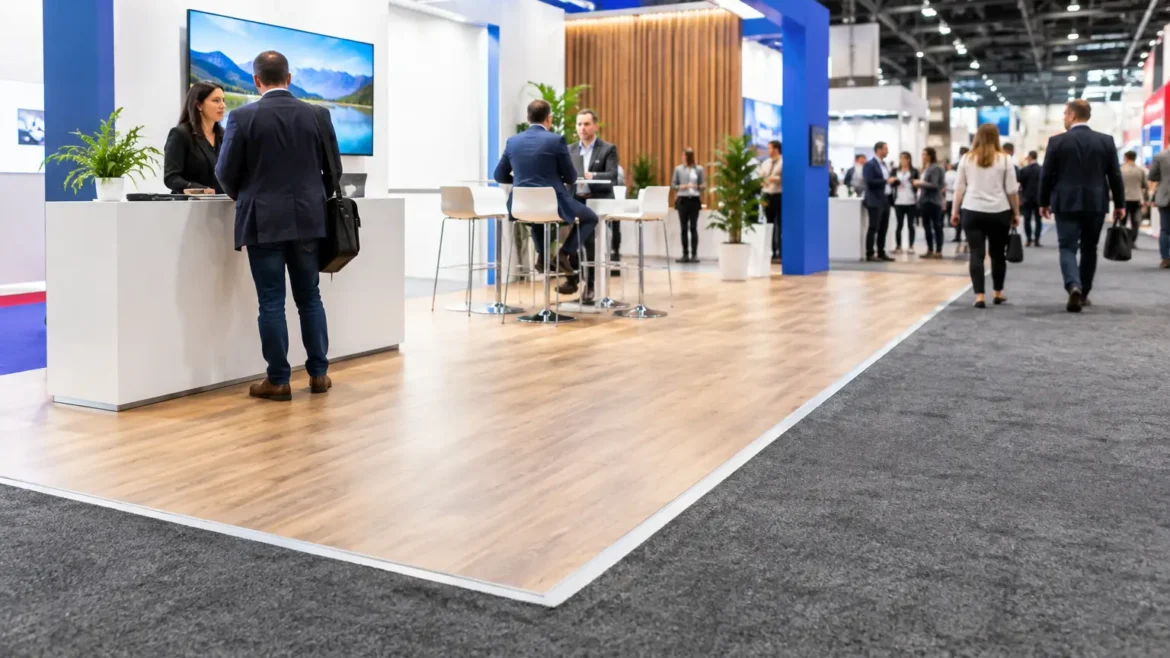
A visitor may not remember the floor beneath their feet, but they will feel the difference the moment they enter your booth. A hard, uneven, or worn-looking surface can make a premium display feel temporary. The best trade show flooring options do more than cover concrete: they define your footprint, support visitor comfort, reinforce brand positioning, and create a finished environment that is ready for business.
For exhibitors planning high-visibility booths, flooring should be selected early in the stand design process. It affects wall heights, counter placement, electrical routing, accessibility, installation timing, and the overall construction budget. The right answer depends on your event duration, booth size, visitor volume, product category, and how much of the stand will be reused.
What Makes Trade Show Flooring Worth the Investment?
Exhibition halls are built for flexibility, not brand presentation. Most begin with plain concrete or basic venue carpeting. Custom flooring gives a booth visual boundaries and a more intentional arrival point, particularly in open exhibition layouts where neighboring stands compete for attention.
It also changes how visitors use the space. A raised platform can separate a private meeting area from a product demonstration zone. Softer materials reduce fatigue for staff who spend long hours standing. Wood-look finishes can make a hospitality, real estate, retail, or lifestyle brand feel warmer and more established.
There is a practical side as well. Well-planned flooring conceals cables, protects the venue surface, creates clean transitions between functional zones, and supports safe movement through the booth. This matters at busy events in Dubai, Abu Dhabi, and Sharjah, where build schedules are tight and installation quality is highly visible.
Best Trade Show Flooring Options by Booth Need
Carpet tiles and exhibition carpet
Carpet remains one of the most widely used options because it is cost-effective, quick to install, and available in a broad range of colors. It works especially well for large booths, conference areas, temporary activations, and layouts that need a soft, welcoming finish without a major construction commitment.
Standard roll carpet is suitable for straightforward, short-term installations, while carpet tiles offer more flexibility. If one section is damaged during setup or the show, it can be replaced without rebuilding the entire floor. Tiles can also be arranged in blocks of color to define consultation areas, lounge spaces, or product zones.
The trade-off is that carpet can look less premium when it is thin, poorly fitted, or used in a high-traffic entry area. Darker shades hide marks better, but a custom color or patterned carpet may create a stronger branded effect. For premium stands, carpet often performs best when paired with a raised floor and clean edge detailing.
Raised platform flooring
A raised platform is the foundation behind many custom-built exhibition stands. Usually constructed from modular timber or engineered panels, it lifts the booth above the hall floor and provides a concealed space for electrical cables, LED connections, and data wiring.
This option is ideal for brands that need a more architectural presence. It gives the stand a clear perimeter, supports different finishes on top, and can create level changes between public and semi-private areas. A platform can also incorporate ramps for accessibility, provided the design follows venue requirements and safe gradients.
Raised flooring costs more than laying carpet directly on the venue floor, and it requires careful coordination with stand approvals, transport, and installation teams. However, it is often the right investment for island stands, double-deck concepts, technology displays, luxury product launches, and booths where cable management must remain invisible.
Vinyl and luxury vinyl tile
Vinyl flooring offers a clean, durable surface that can imitate timber, stone, concrete, or custom graphic finishes. It is easy to clean, handles heavy footfall well, and suits brands looking for a refined look without the weight or cost of natural materials.
Luxury vinyl tile, often called LVT, is particularly effective for retail-inspired booths, property showcases, hospitality brands, and product displays where a wood-look floor supports the desired atmosphere. It also works well with raised platforms, creating a polished finish around counters, shelving, and meeting tables.
The key is installation quality. Poorly joined vinyl can lift at the edges, while a low-grade material may scuff under rolling equipment. For multi-day events or high-volume shows, specify commercial-grade material and ensure transitions are flush and secure.
Laminate and wood-look flooring
Laminate flooring delivers a structured, premium appearance for exhibition stands that need to feel closer to a retail interior or client lounge. It is a strong choice for furniture brands, property developers, automotive displays, financial services, and businesses hosting scheduled meetings within the booth.
Wood-look laminate brings warmth and contrast to a space dominated by printed graphics, screens, and metal structures. It can make a booth feel less like a temporary display and more like a finished commercial environment. When combined with integrated lighting, upholstered seating, and textured wall finishes, it creates an elevated visitor experience.
Laminate is not always the best option for every project. It can be less forgiving on uneven surfaces, takes more time to install than carpet, and needs protection during the stand build. It is most effective when it is part of a fully coordinated custom stand rather than a last-minute surface decision.
Printed vinyl and branded graphic floors
Floor graphics can turn unused square footage into a branding tool. Printed vinyl allows exhibitors to add directional messaging, product icons, campaign patterns, social prompts, or a custom visual identity beneath visitors’ feet. Used well, it can guide traffic toward a demonstration area, product wall, or meeting counter.
This is a high-impact option for product launches, consumer activations, sports brands, beauty displays, and experiential booths. It is also useful when the budget does not allow for extensive structural branding but the floor can carry a bold campaign visual.
Graphic flooring requires restraint. A busy floor can compete with the products and create visual confusion, especially in a compact booth. Keep essential text large, maintain strong contrast, and use non-slip finishes. In most cases, a graphic zone works better than covering the entire floor with messaging.
Interlocking modular tiles
Interlocking tiles are practical for exhibitors who attend multiple events and need a durable, reusable flooring system. Available in rubber, PVC, foam, and composite finishes, they assemble quickly and can be reconfigured for different booth sizes.
They are particularly useful for industrial exhibitions, automotive displays, fitness brands, machinery demonstrations, and outdoor activations. Rubber or PVC systems can withstand equipment weight better than soft carpet and are easier to maintain between events.
Their limitation is visual character. Some modular systems can look functional rather than premium, so finish selection matters. For a high-end brand environment, use them selectively in demonstration areas or choose a system with a refined top layer and custom edge trims.
How to Choose the Right Flooring for Your Stand
Start with visitor behavior. If your team expects quick walk-by traffic, a durable vinyl or branded carpet may be enough. If visitors will spend time in consultations, demonstrations, or hospitality areas, comfort and acoustic softness become more valuable. Carpet, laminate over a platform, or a mixed-material layout may be the better fit.
Next, consider the booth’s technical requirements. Screens, illuminated counters, interactive displays, and product plinths often need hidden cable routes. A raised platform avoids exposed wires and keeps the visual standard high. Heavy products may require reinforced sections rather than a lightweight temporary surface.
Brand position should guide the finish. A luxury real estate developer may benefit from warm wood-look flooring and discreet edge details. A tech brand may prefer a matte charcoal vinyl with illuminated pathways. A food or beauty activation may use patterned flooring to create a memorable campaign setting. Flooring should support the story of the stand, not become an unrelated decoration.
Finally, be realistic about reuse. A custom floor built for one specific footprint may not fit the next event. Modular platforms, carpet tiles, and interlocking systems can offer better long-term value for brands with an active exhibition calendar. A specialist contractor can design a floor package around both the current event and future installations.
Details That Separate a Finished Floor From a Problem Floor
The strongest flooring concepts are resolved before fabrication begins. Confirm venue rules for raised heights, ramps, fire-rated materials, loading access, and permitted adhesives. Plan cable routes before the top finish is installed. Make sure edges are visible and safe, particularly at entry points where visitors may be distracted by screens or signage.
Avoid creating narrow step-ups that are easy to miss. Where a platform is used, integrate a properly designed ramp or clearly defined access point. Consider how chairs, strollers, product trolleys, and visitors with mobility needs will move through the space.
At Creative Roots, flooring is planned as part of the complete exhibition build, not added after the stand concept is approved. That approach keeps the design, fabrication, electrical work, finishes, and on-site installation working as one coordinated system.
The floor is where every visitor begins their experience of your booth. Choose a finish that can handle the traffic, express the brand, and give your team a space they are proud to stand on.