
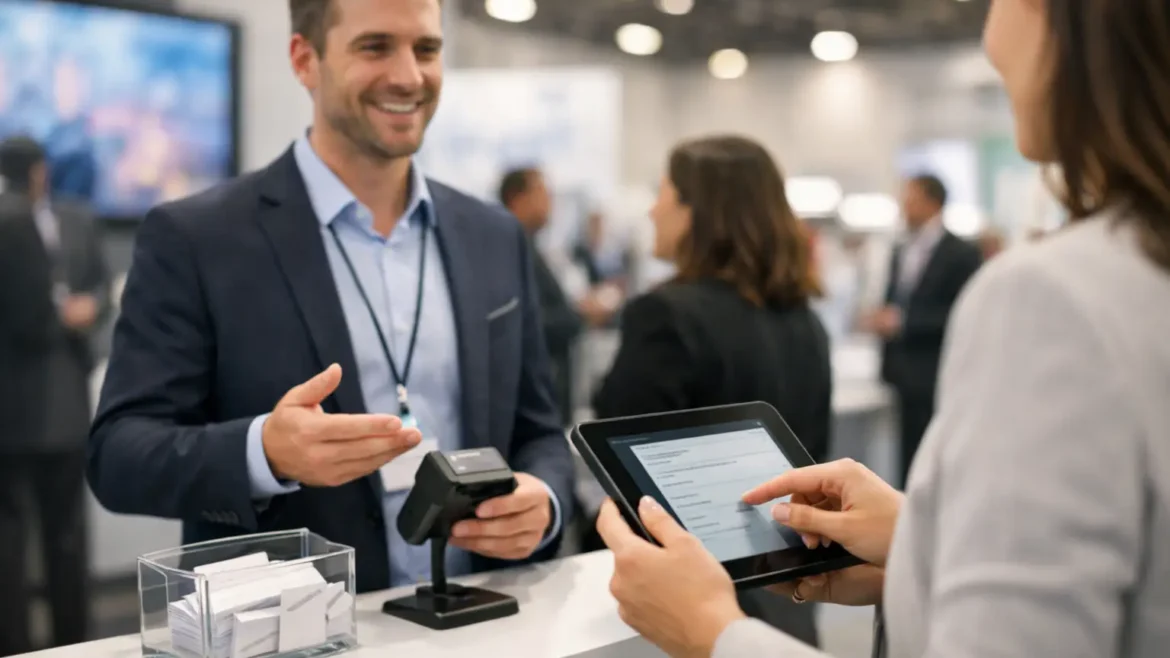
A crowded exhibition stand can look like a success until the event ends and the sales team receives a spreadsheet full of names with no context. Effective trade show lead capture is not about collecting the largest possible number of badge scans. It is about creating the right reasons for visitors to stop, giving your team a useful conversation structure, and transferring qualified opportunities into follow-up while interest is still high.
For exhibitors in Dubai and across the UAE, where major industry events often bring decision-makers, suppliers, and competitors into the same halls, the stand itself has a direct role in lead quality. A custom-built environment should do more than carry your logo. It should make your offer easy to understand from the aisle and support a clear next step once a visitor enters.
Start Trade Show Lead Capture Before the Build Begins
The most expensive lead is the one your team cannot act on after the show. Avoid that outcome by agreeing on what qualifies as a lead before design, fabrication, or staffing decisions are finalized.
For some brands, a qualified lead is a procurement manager with an active project and a defined budget. For others, it may be a retailer seeking a new supplier, a property owner assessing fit-out partners, or a distributor who can open a new market. These are different conversations, so they should not be captured with the same generic form.
Set one commercial objective for the event: book consultations, arrange site visits, introduce a new product line, secure quotations, or build a distributor pipeline. Then define the information your sales team actually needs to move that objective forward. If the form asks for too much, visitors will leave. If it asks for too little, your team will spend days trying to reconstruct what happened.
A practical lead record usually includes these essentials:
- Full name, company, role, email, and mobile number
- The product, service, or project type discussed
- Project timeline, estimated scope, and purchasing authority
- The visitor’s main requirement or challenge
- A clear next action, owner, and follow-up date
The final point is often missed. A contact without a next action is not yet a sales opportunity. Your capture method should make it easy for a staff member to select “send proposal,” “schedule meeting,” “share specifications,” or “call next week” before the visitor walks away.
Design the Stand Around a Conversation
Visitors make a quick decision from the aisle. They need to understand what you do, who it is for, and why it is worth stopping. Overloaded graphics, large walls of text, and an entrance blocked by furniture can reduce engagement even when the stand looks polished.
A stronger approach uses the front of the stand to create curiosity and the interior to support discussion. A working product demonstration, material sample wall, interactive screen, scaled model, or before-and-after display can give staff a natural opening line. For an exhibition contractor or fit-out specialist, showing build quality through finishes, joinery details, lighting, and display construction is often more persuasive than describing capability on a panel.
The layout matters as much as the message. Create a visible welcome point for quick conversations, an open demonstration area that attracts attention, and a quieter setting for serious discussions. A private meeting space can be valuable when projects involve specifications, budgets, or confidential commercial plans. It is not necessary for every exhibitor, but it becomes essential when the average deal value is high.
There is a trade-off. A highly open stand can generate more walk-up traffic but may make longer meetings difficult. An enclosed stand can feel premium and focused but risks appearing inaccessible. The right balance depends on your sales cycle, product complexity, and the type of attendee expected at the show.
Give Visitors One Clear Reason to Engage
“Learn more” is rarely enough. Build a stand experience around a specific exchange: receive a project consultation, compare material options, get a preliminary layout review, see a live demonstration, or request a tailored quote. The offer should be commercially relevant, not a giveaway unrelated to your business.
Promotional items can still help when they are connected to the audience and used selectively. A premium corporate gift for a booked meeting may support relationship-building. Handing out hundreds of low-value items to passersby may increase footfall, but it can also distract staff from prospects with real buying intent.
Equip Your Team to Qualify, Not Just Greet
The people on the stand determine whether attention becomes pipeline. Friendly greetings are useful, but staff need a short qualification path that feels natural rather than scripted.
A simple opening might ask what brought the visitor to the event or whether they are planning a specific project. Based on the answer, the conversation can move toward scope, timing, decision process, and the challenge they want to solve. This approach respects the visitor’s time while giving your team enough context to decide whether to arrange a meeting, provide information, or record a lower-priority contact.
Keep the stand team focused. Senior sales or technical specialists should not be occupied with every badge scan, while front-of-house staff should not be left to handle detailed questions they cannot answer. Assign roles for welcoming visitors, demonstrating solutions, qualifying needs, recording data, and hosting scheduled meetings. During peak hours, this division prevents good prospects from being lost while the team is busy with casual traffic.
Before the doors open, hold a short briefing on the event objective, ideal customer profile, key messages, capture process, and escalation route for high-value prospects. Rehearse how the team will introduce the offer and how they will close a conversation. The goal is not to make every interaction identical. It is to ensure every team member knows what useful information looks like.
Choose Technology That Supports the Moment
Badge scanners, tablets, QR codes, and CRM-connected forms can speed up trade show lead capture, but technology does not fix an unclear process. A badge scan alone identifies a person. It does not reveal whether they have a project, when they need it, or what they discussed.
Use a digital form with short pick-list fields so staff can record key details quickly. Free-text notes are still valuable for context, especially for custom projects, but they should not be the only record. If internet reliability is uncertain at the venue, choose a tool that works offline and syncs later. Keep a simple backup method available in case devices fail or queues form.
QR codes are useful for brochures, specifications, catalogs, or booking forms. They work best when the visitor gets immediate value after scanning. A code displayed without a clear benefit is easy to ignore. Also, do not rely on QR scans as your only lead source. Many decision-makers prefer a direct conversation before sharing their details.
Data handling deserves attention. Tell visitors why you are collecting their information, keep access limited to the relevant team, and avoid adding contacts to broad marketing communications without appropriate permission. Good data practice protects your brand and improves the quality of future outreach.
Follow Up While the Conversation Is Fresh
The event may last three days, but the most effective follow-up often begins before it closes. High-priority prospects should receive a personal message from the assigned salesperson on the same day, referring to the project, product, or challenge discussed. This is far more effective than a generic “great to meet you” email sent to every scanned contact a week later.
Create a clear service-level target. Hot opportunities might receive a call within 24 hours and a proposal meeting within several days. Warm contacts may receive relevant case material or a useful specification document, followed by a scheduled check-in. Lower-intent contacts can enter a more gradual nurture process, but they still need segmentation based on what interested them.
Your follow-up should continue the stand conversation, not restart it. Refer to the sample they viewed, the site requirement they mentioned, or the meeting they requested. If your team promised pricing, drawings, or a callback, deliver it when promised. Exhibition credibility is built on the floor, then tested immediately afterward.
Measure Commercial Value, Not Just Visitor Volume
A busy stand is not automatically a profitable stand. Track visitor interactions, captured contacts, qualified leads, booked meetings, proposals issued, and revenue won. Review which attraction, message, product display, or staff approach generated the strongest opportunities.
It also helps to record why promising conversations did not progress. Was the project timing too distant? Was the visitor not a decision-maker? Did the stand message attract the wrong audience? These insights improve the next event far more than a headline number of scans.
For brands investing in a bespoke exhibition environment, the design and lead process should be planned as one project. Creative Roots approaches exhibition stands with that commercial purpose in mind: a built environment that attracts the right audience, gives the sales team room to perform, and supports an organized path from first conversation to final installation.
The best test is simple: when a qualified visitor leaves your stand, can one person on your team explain exactly what they need, what happens next, and when it will happen? Build your event around that answer, and every square foot works harder.