
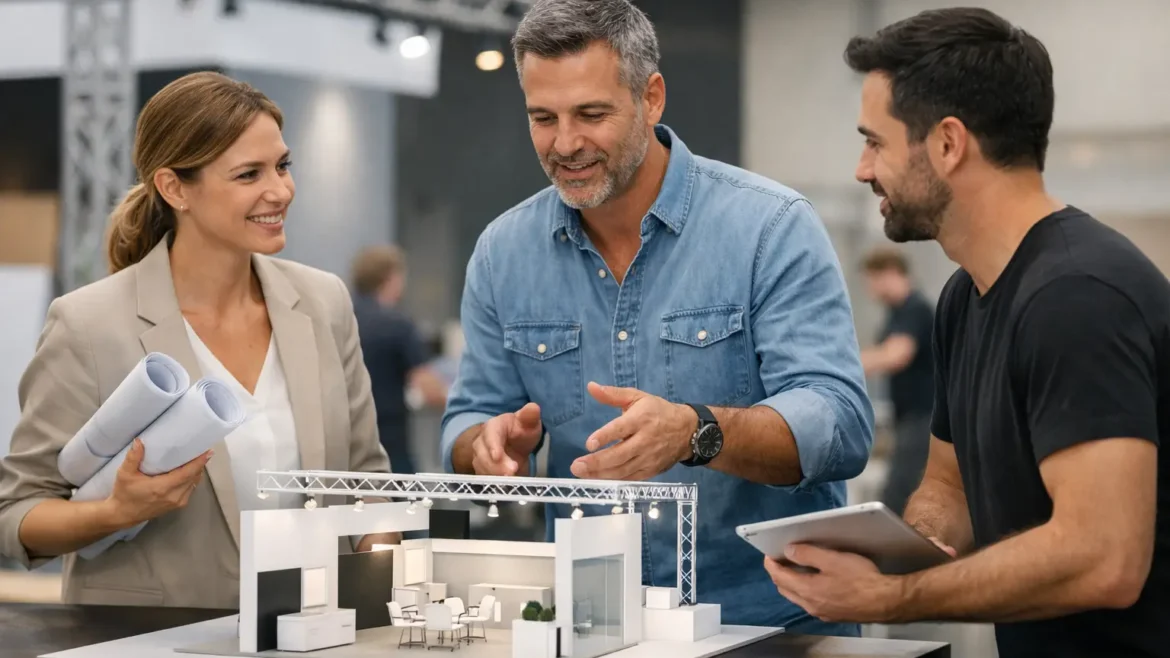
A strong exhibition stand rarely starts with a clever sketch. It starts with a clear commercial brief. Knowing how to brief exhibition fabricators means giving your design and build partner enough direction to create a space that attracts the right visitors, supports your event team, meets venue rules, and can actually be built on time.
For exhibitors, the stakes are high. Your stand may have only a few days to make an impression, yet it represents months of planning, a significant marketing investment, and the reputation of your brand. A vague request such as “we need something premium” can produce a vague result. A focused brief creates the foundation for a custom-built stand that works as hard as your sales team.
Start With the Business Outcome, Not the Stand Style
Before discussing materials, lighting, or display walls, define what success looks like. Exhibition fabricators need to understand the job the stand must do, not just the visual style you prefer.
Are you launching a product, generating leads, hosting meetings with existing clients, selling directly, recruiting talent, or building brand awareness? These goals affect the layout from the start. A product launch may need a focal demonstration area and high-impact digital content. A B2B exhibitor with a busy sales schedule may need semi-private meeting spaces, secure storage, and a reception point that manages traffic.
Be specific about the audience you want to attract. Describe their role, what they are likely to care about, and what action you want them to take. For example, a stand aimed at procurement teams needs a different visitor journey from one targeting consumers at a lifestyle event.
It also helps to set practical measures of success. You may be aiming for 150 qualified leads, 30 scheduled meetings, a certain number of demonstrations, or stronger visibility from a main aisle. Fabricators and designers can make better decisions when they understand these priorities.
How to Brief Exhibition Fabricators With Essential Facts
The best briefs do not need to be long, but they must be complete. Start with the event name, venue, dates, stand number, hall plan, and confirmed stand dimensions. State whether the plot is inline, corner, peninsula, or island space. Each configuration changes how visitors approach the stand and which sides need to remain open.
Share the organizer’s technical manual as early as possible. This is not an administrative detail. It can determine maximum build height, permitted hanging signs, electrical requirements, fire-rated materials, access times, rigging rules, and whether approvals are required before construction begins.
In Dubai and across the UAE, venue regulations, organizer deadlines, and installation windows can be tight. Your fabricator should receive the official information rather than relying on assumptions or screenshots from previous editions of an event. A stand that looks right on a concept rendering can become expensive to alter if it overlooks a venue restriction.
Your brief should also include the following project inputs:
- Your brand guidelines, including logo files, color references, typography, imagery, and messaging hierarchy.
- A list of products, samples, screens, equipment, furniture, and giveaways that must fit within the space.
- Operational needs such as storage, pantry facilities, lockable cabinets, power points, internet access, and staff break requirements.
- Accessibility, safety, or privacy needs that could affect floor levels, entrances, counters, and meeting rooms.
- A realistic target budget and the expected scope it needs to cover.
Providing these details at the beginning gives the fabrication team room to solve problems creatively instead of adding costly adjustments later.
Give a Budget Range That Supports Better Design Decisions
Many exhibitors hold back their budget because they want to compare proposals objectively. That is understandable, but a complete lack of budget guidance often leads to mismatched concepts. One supplier may propose a clean modular solution, while another presents an elaborate double-deck build with features that were never financially realistic.
A budget range allows your exhibition fabricator to recommend the right level of custom joinery, audiovisual equipment, lighting, graphics, flooring, and structural complexity. It also helps identify where investment will have the most visible commercial impact.
Ask what is included in the quoted figure. Depending on the project, the budget may need to cover design, fabrication, graphics, furniture rental, venue service orders, transport, installation, dismantling, storage, and permits. A lower headline price is not necessarily better value if key delivery items appear later as extras.
There are real trade-offs. Reusable components can lower long-term costs if you exhibit frequently, but they may limit the freedom of a fully bespoke build. Premium finishes can elevate perceived value, but only if they are visible in the areas visitors will notice. Spend according to your event strategy, not simply on the most expensive materials.
Explain the Visitor Journey You Need
An exhibition stand is a working environment, not a billboard. Brief your fabricator on how people should move through it.
Describe where visitors should first notice the brand, where they should stop, and where conversations or demonstrations should happen. If your team needs to scan badges at reception, mention it. If a product needs to be demonstrated safely, provide its dimensions, power requirements, ventilation needs, and operating procedure. If meetings are confidential, state whether visual screening and acoustic separation are needed.
Think about the staff experience as well. A beautiful stand can fail operationally if the team has nowhere to store stock, charge devices, keep personal items, or prepare refreshments. Tell the fabricator how many staff members will be present at peak times and whether the space must accommodate VIPs, distributors, media, or walk-in visitors at the same time.
This is where an experienced turnkey contractor adds value. The team can translate business activity into zones, circulation, joinery, lighting, branding, and build specifications that work on the exhibition floor.
Separate Inspiration From Requirements
Reference images are useful, especially when they show the atmosphere or material quality you want. However, they should not replace a brief. A photo from another exhibition may feature a larger footprint, a different height allowance, or a budget that has no relationship to yours.
Label reference material clearly. Explain whether you like the overall mood, the color palette, the open layout, a lighting technique, a reception counter, or the way products are displayed. Also state what you do not want. This prevents a design team from mistaking one attractive detail for the entire creative direction.
Your non-negotiables should be equally clear. These may include a large LED screen, a specific product wall, a private meeting room, a coffee counter, or a structure visible from a particular aisle. When priorities conflict, your fabricator can protect the elements that matter most.
Set a Clear Approval Process
Late changes are one of the fastest ways to affect cost, timing, and finish quality. Establish who provides feedback, who has final sign-off, and how many review rounds are expected before fabrication starts.
Ask for a staged process: initial concept, revised design, technical drawings, material and graphic approvals, then final production confirmation. At each stage, review the work against the original objectives rather than responding only to personal preferences. Does the stand communicate the right message? Does it create enough space for meetings? Can staff operate it comfortably? Is the main product visible from the aisle?
Consolidate feedback internally before sending it to the fabricator. Conflicting comments from marketing, sales, management, and procurement can stall a project. One coordinated response keeps design development moving and gives the build team a reliable instruction set.
Treat Installation Planning as Part of the Brief
A fabricator can build an impressive stand in the workshop, but exhibition delivery depends on logistics as much as craftsmanship. Confirm the build-up and dismantling schedule, venue access rules, loading arrangements, site contacts, and any mandatory induction requirements.
If your project includes fragile displays, valuable products, live technology, or complex audiovisual equipment, discuss handover and testing time. Do not assume the stand is ready the moment construction ends. Your team may need time for product placement, screen testing, merchandising, cleaning, staff briefing, and final photography.
Creative Roots approaches exhibition projects as end-to-end builds, combining design, in-house fabrication, site coordination, and installation. That integrated approach is most effective when the client brief provides commercial clarity from the first consultation.
A Better Brief Produces a Better Stand
The right brief gives exhibition fabricators a practical target: what your brand needs to achieve, what the venue permits, what your team needs to do, and where the budget should work hardest. It reduces guesswork without restricting creative thinking.
Bring the facts, the priorities, and the decision-makers into the process early. Then give your fabrication partner room to turn that direction into a physical environment people will remember – and your event team will be ready to use.