
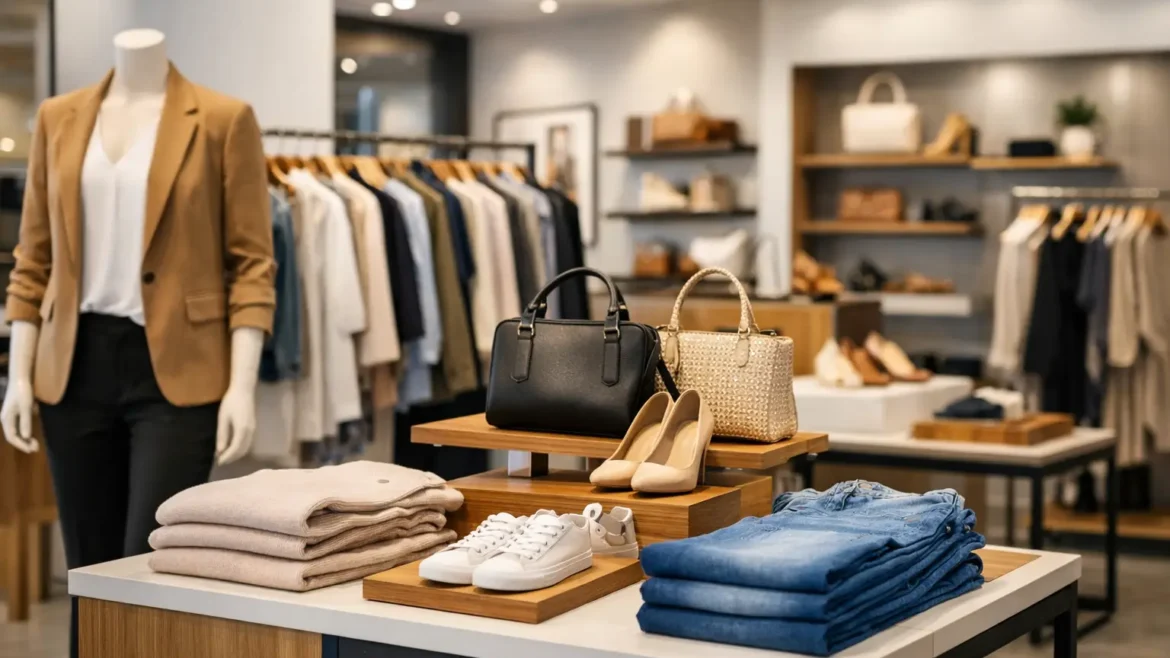
A retail space can have premium products, sharp branding, and a strong location, yet still lose sales if customers cannot immediately understand where to look, what to touch, or how to move through the store. Store fixtures solve that practical problem. They create the physical framework for merchandise, guide shopper behavior, and turn a branded interior into a working sales environment.
For retailers, property teams, and brand managers, fixtures are not an afterthought to be ordered once the fit-out is nearly complete. They should be planned alongside the layout, lighting, signage, storage, and customer journey. The right fixture system makes a compact shop feel organized, gives a new collection the attention it deserves, and helps staff keep the sales floor presentation-ready during busy trading hours.
Start With the Customer Journey, Not the Catalog
It is easy to select fixtures based on appearance alone: a wall bay that looks polished, a freestanding rack that photographs well, or a display table that matches a global brand reference. But an attractive fixture can still work against the store if it creates congestion, hides key products, or requires constant maintenance.
Start by mapping how people enter, browse, pause, and pay. The first few meters should communicate the brand quickly and give customers a reason to move farther in. New arrivals, hero products, seasonal campaigns, and high-margin items often belong in this zone, supported by fixtures that create focus rather than visual clutter.
From there, the layout needs a clear rhythm. Wall-mounted shelving can carry depth of stock without consuming floor area. Central gondolas and tables invite discovery, while lower fixtures preserve sightlines in smaller retail units. Near the checkout, compact impulse displays can increase basket value, provided they do not interfere with queue management or staff movement.
A successful customer journey is not always a straight path. Fashion, beauty, lifestyle, and specialty stores may benefit from moments of discovery. Convenience-led retail, however, often needs direct navigation and rapid product access. The best approach depends on what customers came to accomplish and how long they are likely to stay.
Choose Store Fixtures for the Product They Carry
A fixture should support the product, not force the product to fit an unsuitable format. Apparel needs hanging capacity, folding surfaces, changing-room support, and practical replenishment access. Cosmetics require clean presentation, tester integration, controlled lighting, and secure storage. Electronics need cable management, product security, demo positions, and durable surfaces that withstand frequent customer interaction.
Food, pharmacy, and high-volume convenience retail bring different requirements. Shelving must carry weight, tolerate frequent restocking, and remain easy to clean. In these environments, standardized modular systems may be more practical than highly sculptural custom units. A flagship store or luxury boutique may place greater value on distinctive detailing, material quality, and a fixture language that cannot be copied by the competitor next door.
Before approving a design, evaluate these operational questions:
- What are the largest, heaviest, and most frequently handled products?
- How often will the display need replenishment, cleaning, or seasonal remerchandising?
- Does the fixture need integrated lighting, power, screens, locks, or storage?
- Can staff access stock without blocking shoppers or dismantling the display?
- Will the materials withstand the store’s traffic level and cleaning routine?
These details determine whether a fixture continues to perform six months after opening, not just on launch day.
Fixed, Modular, or Fully Custom-Built?
Fixed fixtures are built for a specific position and are usually integrated into the interior architecture. They are ideal for wall displays, cash wraps, premium feature walls, and locations where a consistent branded look matters more than frequent changes. Their trade-off is flexibility. Moving them later can require further fit-out work.
Modular fixtures provide a stronger balance for retailers that regularly refresh merchandise. Adjustable shelves, interchangeable hooks, slatwall panels, and movable display components allow teams to reorganize the sales floor without commissioning a new build. They can be efficient, but a purely modular system can look generic if its finishes and proportions are not aligned with the brand.
Custom-built fixtures offer the most control over dimensions, materials, function, and visual identity. They are especially valuable for irregular floor plans, mall kiosks, premium retail concepts, and product categories that need specialized display solutions. Custom work requires a more detailed design and production process, but it can solve several issues at once: merchandising, storage, branding, lighting, and customer interaction.
Let Materials Carry the Right Brand Message
Materials communicate before a customer reads a single sign. Timber veneers and textured laminates can bring warmth to wellness, lifestyle, and artisanal brands. Powder-coated metal gives a sharper, more industrial feel and performs well in high-traffic environments. Glass can elevate jewelry, beauty, and technology displays, though it requires careful detailing, cleaning access, and safety consideration.
The objective is not to use the most expensive material everywhere. It is to invest where customers see and touch the fixture, then use durable, cost-conscious construction where it is less visible. For example, a feature table may use a refined stone-look top and custom metal base, while stock storage below uses practical laminated board and commercial-grade hardware.
Color also needs discipline. Fixtures should support the merchandise rather than compete with it. Neutral finishes often work best when product colors change frequently. A brand with a defined visual identity may use its signature color selectively at the entry, display edges, back panels, or signage zones. Too much color across every unit can make a store feel crowded, particularly under strong retail lighting.
Build Flexibility Into Campaigns and Growth
Retail calendars move quickly. Ramadan, back-to-school, holiday gifting, product launches, and promotional weekends can all require a new visual message. When fixtures are designed only for permanent displays, campaign execution becomes slow and costly.
Plan practical change points into the fixture system. Magnetic graphic panels, removable sign holders, adjustable shelves, replaceable backdrops, and integrated screen locations allow the brand to update the environment without rebuilding it. This is particularly useful in Dubai and across the UAE, where retail spaces often support a fast cycle of activations, international launches, and seasonal offers.
For mall kiosks, flexibility is even more critical because every surface works harder. The unit may need to display products, hold packaging, support payments, store staff items, integrate digital content, and remain visually open from several directions. A kiosk that looks impressive but leaves no room for stock or staff circulation quickly becomes difficult to operate.
Design for Staff as Carefully as You Design for Shoppers
Store fixtures affect daily labor costs. If staff have to walk to a back room for every size, repeatedly straighten unstable shelves, or use temporary storage because the counter has no capacity, the store will feel disorganized during its busiest hours.
Counters should have sufficient internal storage, secure drawers where needed, and sensible access to POS equipment. Display units should be stable, easy to clean, and designed with realistic tolerances for product loading. Hidden cable routes, ventilation for equipment, and accessible maintenance panels matter more than many retailers expect.
Safety also belongs in the brief. Tall fixtures need secure fixing, glass needs appropriate thickness and edge finishing, and aisles must remain accessible. In commercial locations, materials and construction details may also need to meet landlord, mall management, and local authority requirements. Addressing these early protects the project timeline and reduces late-stage revisions.
Coordinate Fixtures With the Full Fit-Out
Fixtures deliver their best result when they are coordinated with the wider interior from the start. Lighting needs to land on products rather than create shadows behind shelves. Electrical points need to support illuminated displays and digital units. Flooring transitions should not make movable displays unstable. Signage needs clear positions, not improvised space added after fabrication.
This is where an end-to-end contractor brings real value. Instead of treating fixtures, fit-out works, graphics, and installation as separate packages, the project can be developed as one commercial environment with one execution plan. Creative Roots combines custom fabrication, retail fit-outs, branded displays, and on-site installation so that the details are resolved before the store is handed over.
The result is not simply a more attractive shop. It is a space that gives products a stronger stage, helps staff work efficiently, and gives customers a clearer reason to browse, engage, and buy. When planning your next retail build, ask not only how the fixtures will look on opening day, but how they will perform through every delivery, promotion, and busy sales hour that follows.