
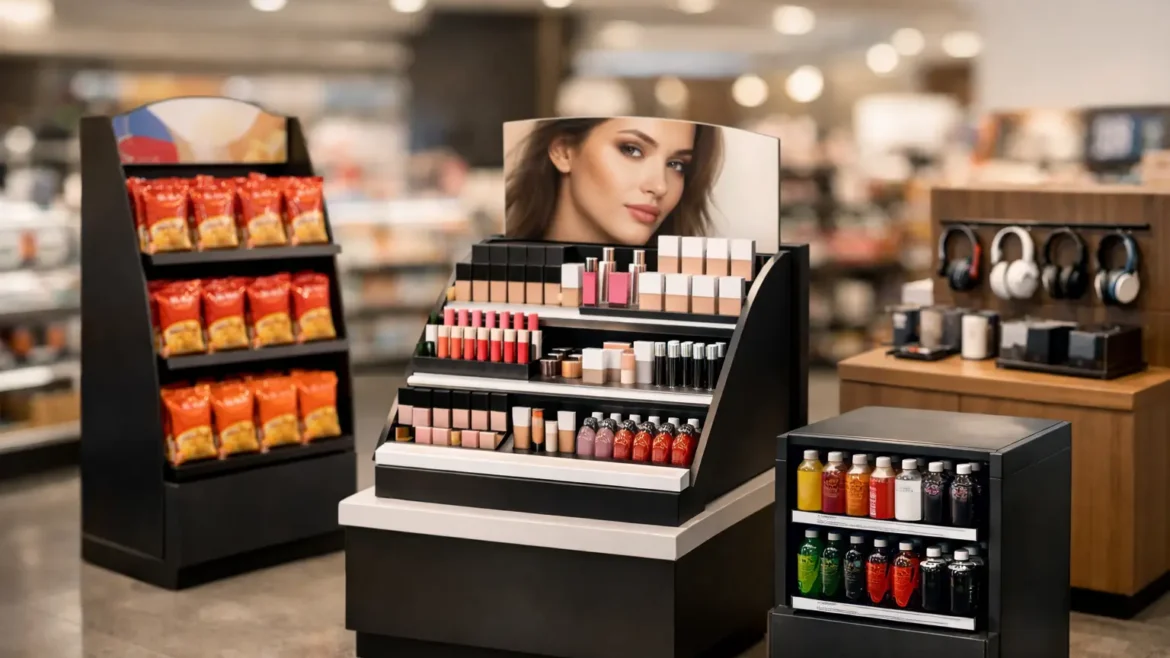
A customer has already entered the store, reached the aisle, and paused near the product. That last few feet is where custom point of purchase displays do their real work. A well-built unit gives a product a reason to be noticed, understood, and picked up before the shopper moves on.
For retailers, brand managers, and activation teams, the question is not whether a display should look attractive. It should. The more useful question is whether it can perform in a live commercial environment: fit the approved footprint, carry stock safely, communicate a message in seconds, and keep looking sharp after hundreds of customer interactions.
What a Point of Purchase Display Must Accomplish
A point of purchase display sits close to the buying decision. It may be a freestanding floor unit, a counter display, an endcap feature, a promotional island, or a branded fixture integrated into a kiosk or retail fit-out. Its job is immediate: interrupt routine, make the offer clear, and help the customer act without needing a sales explanation.
That makes display design a commercial exercise, not just a branding exercise. A visually dramatic structure that blocks circulation or hides the product will underperform. So will a practical stock holder with no clear brand hierarchy. The strongest displays balance visibility, function, and build quality from the first concept.
In high-traffic retail environments, a display also represents the brand when the team is busy elsewhere. Its graphics need to be legible at a distance. Its shelves need to make selection easy. Its materials need to withstand cleaning, restocking, carts, bags, and constant touch.
Start With the Retail Objective, Not the Shape
Before choosing finishes, lighting, or a dramatic silhouette, define what success looks like. A launch display for a new product needs awareness and clear product education. A promotional display may need to carry higher stock volume and make the price impossible to miss. A premium beauty or technology feature may prioritize sampling, demonstration, and perceived value over capacity.
The objective determines the format. Floor-standing displays are effective when a campaign needs presence from multiple sightlines. Countertop units work when the item is smaller, impulsive, and supported by a cashier interaction. Modular fixtures suit brands that rotate campaigns across several locations. A more permanent custom fixture may be the better investment for a flagship store, mall kiosk, or long-term brand zone.
It depends on the sales environment as much as the product. A busy supermarket requires quick recognition and easy replenishment. A luxury mall setting can support more detailed material choices, controlled lighting, and a slower customer journey. Copying a display format from one category to another rarely delivers the same result.
Define the one action you want
Every custom display should have a primary action. Buy now, test a sample, scan a code, ask a promoter, compare options, or collect a gift. If the unit asks customers to do all of these at once, the message becomes diluted.
Place the main action where the customer naturally stands. Product, benefit, and price should work together rather than compete for the same visual space. A clean hierarchy is usually more persuasive than a wall of claims.
Design for a Three-Second Read
Retail is full of visual noise. Shoppers do not approach every display with equal attention, so the first view must work fast. From a few steps away, people should be able to recognize the brand, identify the product category, and understand the reason to stop.
This is where oversized logos alone can fall short. Brand visibility matters, but customers also need a recognizable product image, an offer, or a simple benefit. A display for a beverage might lead with refreshment or a limited flavor. A skincare unit might show the product, the skin concern it addresses, and a sample invitation. The right message changes by category, but the hierarchy stays simple.
Use lighting with purpose. Edge-lit acrylic, backlit signage, and focused shelf lighting can make a display more visible, particularly in a mall or exhibition-style activation. Yet lighting adds electrical planning, heat considerations, access panels, and maintenance requirements. It should support the product instead of becoming the product.
Color and finish also need to match the environment. High-gloss surfaces can look premium but reveal fingerprints quickly. Matte laminates are easier to maintain but may need stronger contrast in a dim location. Wood textures, metal accents, acrylic, fabric, printed panels, and laser-cut details can all add character when they reflect the brand rather than follow a trend for its own sake.
Build Custom Point of Purchase Displays for Real Conditions
A display that photographs well in a workshop is only half finished. The real test begins once it reaches a store, mall, or event venue. Custom point of purchase displays need engineering behind the creative concept.
Weight distribution matters, especially for tall units and product-heavy shelving. The base, frame, and shelving system must be designed for the actual load, not an idealized product arrangement. Hidden ballast, metal subframes, and properly specified hardware may not be visible to customers, but they protect both the display and the people around it.
Access is equally important. Can staff restock without dismantling branding panels? Can they reach the electrical connections if lighting is installed? Is the storage compartment large enough for the expected turnover? A small improvement in replenishment time can make a major difference during a promotion.
For campaigns across multiple sites, modularity can reduce transport and installation costs. Components that pack flat, connect securely, and allow graphics to be updated extend the useful life of the investment. The trade-off is that highly modular systems may offer less sculptural freedom than a one-off built fixture. The right choice depends on campaign duration, venue count, and the value of reusing the unit.
Plan around approvals and site restrictions
Retail centers, airports, exhibitions, and commercial properties often have rules covering dimensions, electrical load, fire-rated materials, access clearances, installation hours, and signage placement. These requirements should shape the design early, not become a last-minute compromise.
Local execution experience is especially valuable in Dubai and across the UAE, where mall regulations, delivery windows, and contractor coordination can affect the schedule. A design-and-build partner should be able to translate a creative brief into technical drawings, fabrication details, logistics planning, and on-site installation without handing accountability from one vendor to another.
Choose Materials That Match the Campaign Life
There is no single best material for a branded display. The right construction depends on how long the unit will be used, where it will sit, how often it will move, and what customers will do around it.
Temporary campaigns may use printed boards, lightweight panels, vinyl graphics, and simple modular structures to achieve impact within a tighter budget. Longer-term retail units often benefit from MDF or plywood carcasses, laminates, acrylic, metal, glass, and durable branded finishes. Outdoor or semi-outdoor activations need a different approach again, with weather-resistant finishes, protected graphics, and suitable electrical components.
Avoid treating durability as an all-or-nothing decision. Spending heavily on permanent-grade materials for a two-week campaign may not make commercial sense. On the other hand, cutting build quality on a display placed in a premium mall can quickly damage perception if edges chip, shelves sag, or graphics peel.
Make Installation Part of the Design Process
A great display can lose value through a poor handover. Before fabrication begins, confirm the installation route, lift dimensions, loading access, power availability, site protection requirements, and the time allowed for setup. A large unit may need to be built in sections. A backlit feature may need pre-approved power points. A mall campaign may need overnight installation to avoid disrupting shoppers.
This is why turnkey delivery matters. When the same team manages design, in-house fabrication, branding production, delivery, and installation, the project stays connected from sketch to site. Creative Roots approaches physical brand environments this way, combining custom manufacturing with the practical coordination required for retail, kiosk, exhibition, and fit-out projects.
Once installed, inspect the display from the customer’s view as well as the staff’s view. Check sightlines, product access, graphic alignment, lighting, stability, and any sharp or exposed edges. Then set a simple maintenance plan for cleaning, replenishment, replacement graphics, and minor repairs.
The most effective display is not the one that demands the most attention from your team. It is the one that keeps doing its job when the retail floor gets busy: clear message, easy product access, reliable construction, and a brand presence customers remember long after they have walked past it.